
Industries · Textile & Luxury
Expertise is scarce. Scheduling must not waste it.
Contract workshops, skilled craftsmanship, collection peaks, and uncompromising quality standards. In these trades, the critical resource is not the machine — it is the person who knows how. ROBIN schedules around that resource.


Who it's for
Luxury houses and subcontractors: leather goods, garment making, tanning, footwear, luxury perfumes and cosmetics. One-off production, small batches and exceptional pieces.
What ROBIN does
Scheduling that takes into account operator qualifications, material resting or drying times and the seasonality of collections; reinsertion of rework and piece-by-piece traceability.
What it changes
The load is levelled across rare skills instead of overloading the same people, rework no longer breaks the plan, and the history of each piece is available without a separate register.
Industry challenges
Scheduling a machine is simple. Scheduling a qualification is less so.
In a luxury workshop, capacity is not counted in available workstations but in mastered techniques — and that capacity changes every week.
Rare skills
Only a few people in the workshop can perform a given operation.
Absences, training, skills development, departures: the real capacity on rare techniques is constantly shifting. A schedule built on workstations rather than qualifications promises dates that the shop floor cannot meet.
Seasonality
Load arrives in waves, with dates that are non-negotiable.
Fashion shows, boutique launches, capsule editions. Collection peaks overload the same workshops at the same time, while the troughs leave skills under-used a few weeks later.
Quality and rework
Rework is part of the craft — but not part of the schedule.
The level of quality demanded produces a structural rework rate. Every reworked piece comes back into the workshop and consumes precisely the scarcest resource, without ever having been planned into the load.
Product traceability
A piece's history is part of its value.
Material provenance, workshop, operations performed: traceability is not just an obligation, it is part of the product. It must be built during manufacturing, without adding to the craftspeople's workload.
What ROBIN brings
A plan built on available skills, not on workstations.
Facing rare skills
Schedule by qualification, not just by workstation.
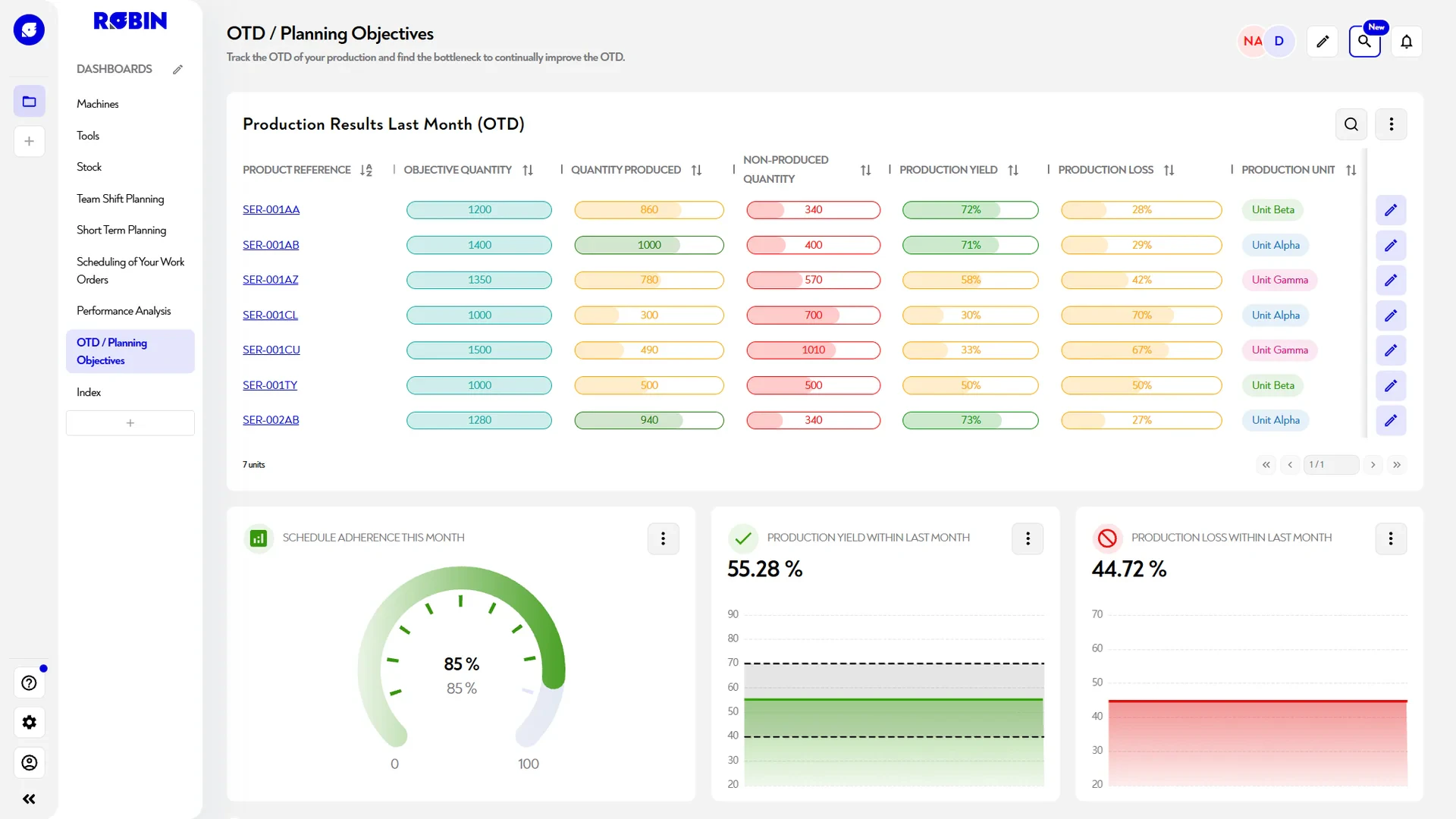
ROBIN assigns each operation to a genuinely qualified resource, taking into account skills matrices, absences and skills development. The load is levelled across the rare people instead of concentrating on the same ones.
- Skills matrix built into sequencing
- Calendar of absences, leave and training
- Load levelling on critical techniques
Facing collection peaks
See the wave before it hits.
ROBIN projects the load over the collection horizon and shows where capacity will fall short, week by week. You decide in advance: bring part of the production forward, reinforce a workshop, or hand a batch to a partner subcontractor.
- Load projection over the collection horizon
- Scenarios compared before deciding
- Planning ahead for reinforcements and subcontracting
Facing rework and traceability
Rework goes back into the plan, the piece keeps its history.
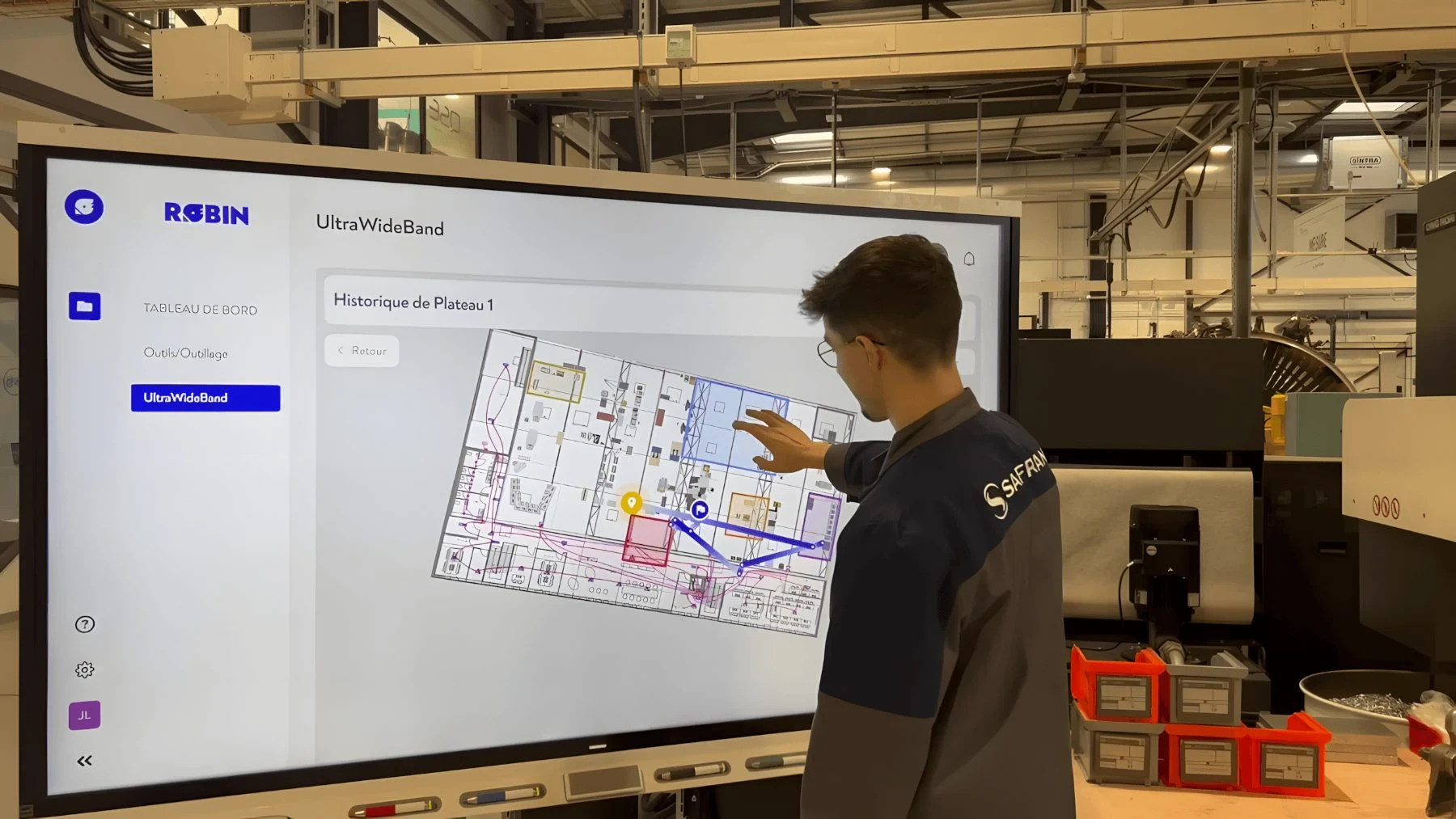
A piece sent back for rework is rescheduled with its real priority and its skill constraint. In parallel, every operation and every movement is time-stamped, which builds the piece's history with no extra data entry.
- Rework rescheduled automatically
- Time-stamped piece-by-piece history
- WIP located on the shop floor
They manufacture in luxury

Zozio has enabled us to significantly digitalise and automate the management of our mobile tanks. It is a real-time, collaborative platform: we know where the tanks are — including when they are on lorries in transit — whilst being certain of their regulatory compliance. Working conditions are improving significantly, as we are reducing the mental load on our teams.
 Fragrance Brands · PerfumesAll testimonials
Use cases
What textile and leather goods workshops come looking for.
Three situations that subcontractors and luxury houses entrust to us most often.

Optimise resources
Rare know-how is scheduled by qualification: an operation only lands on a qualified craftsperson, and the load is levelled across collection peaks.
See the use caseWIP visibility
Every piece tracked individually, rework included, with a time-stamped history of operations and movements.
See the use case
Move beyond Excel scheduling
Scheduling leaves the spreadsheet: a single plan, shared from the shop floor to the design office, that builds in rework instead of suffering it.
See the use case
FAQ · Textile & Luxury
Questions from textile and luxury workshops
Can ROBIN schedule by operator skill rather than by workstation alone?
Yes. Qualifications are modelled as an assignment constraint: an operation can only be scheduled to a person authorised to carry it out. Absences, leave, and training reduce the available capacity for the tasks concerned, and the plan accounts for this.
How do you manage rework without breaking the schedule?
Rework, also called repair or reintegration depending on the plant, can come from a defect found at quality control, a non-conformity during production or a customer return.
ROBIN treats it as a new operation to schedule, with its priority and the skills it requires. It reinserts it into the sequence and shows its impact on the other parts.
The conflict is resolved locally: only the operations concerned are shifted, the rest of the plan stays as it is.
Our operation times vary a lot — is that a problem?
No. ROBIN does not assume fixed durations: times are defined per operation-reference pair, and the plan is recalculated with every new piece of information (diagnosis, actual progress measured by tracking, emerging work). Actual times are continuously compared with theoretical ones, and estimates become more reliable with use, with no extra data entry.
Can each part be tracked individually?
Yes. Each part, batch, or container can be tracked individually via geolocation, with a timestamped history of operations and movements. This history is viewable and exportable without manual reconstruction.
Take action
Are your rare skills really in the right place?
Let's talk about your workshop — a demo on your own data is possible within a few days.