
Role · Quality
Reconstructing a part's journey should not take two days.
ROBIN records the actual journey of every part on the shop floor: zones traversed, waiting times, operations, and rework. Traceability is produced by the flow, not reconstructed after the fact. And when a rework arises, it is rescheduled without causing the rest to slip.
They already trace their flows with ROBIN






The three figures
Three figures are enough to investigate a case.
These are the ones ROBIN records as production unfolds, and the ones that recur throughout the rest of this page.
Journeyactual part path
What really happened
The zones crossed and the waiting times, timestamped. It is the raw material for a root-cause analysis, not a reconstructed file.
Reworkshare of flow
What comes back
The share of operations that come back, and at which workstation. A recurring rework at the same spot is not a disruption.
Waitingtime per zone
What explains the lead time
The time during which the part underwent nothing. It is often the majority of the lead time, and nobody documents it.
Your challenges
Three things that leave quality blind.
They recur in every shop floor with a complex flow: job shop, short runs, one-off parts or maintenance.
Traceability reconstructed after the fact
An audit, a claim, a non-conformance: you need to find out what happened. You cross-check forms, emails and memories, and the answer arrives two days later.
Answer — ROBIN.Tracking
- Zones traced12
- HistoryTimestamped
- Reconstruction0 d
The journey of every part is recorded as production unfolds, with its waiting times per zone.
Rework you endure without counting it
A rework is handled at the workstation, without being tied to the flow. Nobody knows the actual rate, and the same cause returns six months later.
Answer — rework in the flow
- Sealing workstation — 9 reworks / 30 dRecurring
- Final inspection workstation — 1 rework / 30 dNominal
Rework is counted by workstation and by period. Recurrence points to the operation to be reworked, not the operator.
The part waiting for a decision
The time spent investigating a non-conformance is idle time. The part occupies a zone, WIP builds up, and the lead time drifts without the cause being visible.
Answer — rescheduling
< 2 min- NC raised
- Rework sequenced
- Lead time met
To the engine, a rework is an operation like any other: it is rescheduled with its quantified impact on milestones.
The product
ROBIN, the platform that manages the shop floor in real time.
ROBIN has five modules. The one that carries your traceability is the location layer.
ROBIN.Tracking
The actual journey of every part, timestamped.
The shop floor location layer: zones crossed, waiting times, a history you can consult part by part.
- Journey and waiting times recorded without operator input
- Rework counted by workstation, by period and by reason
- History available immediately, for an audit or a claim
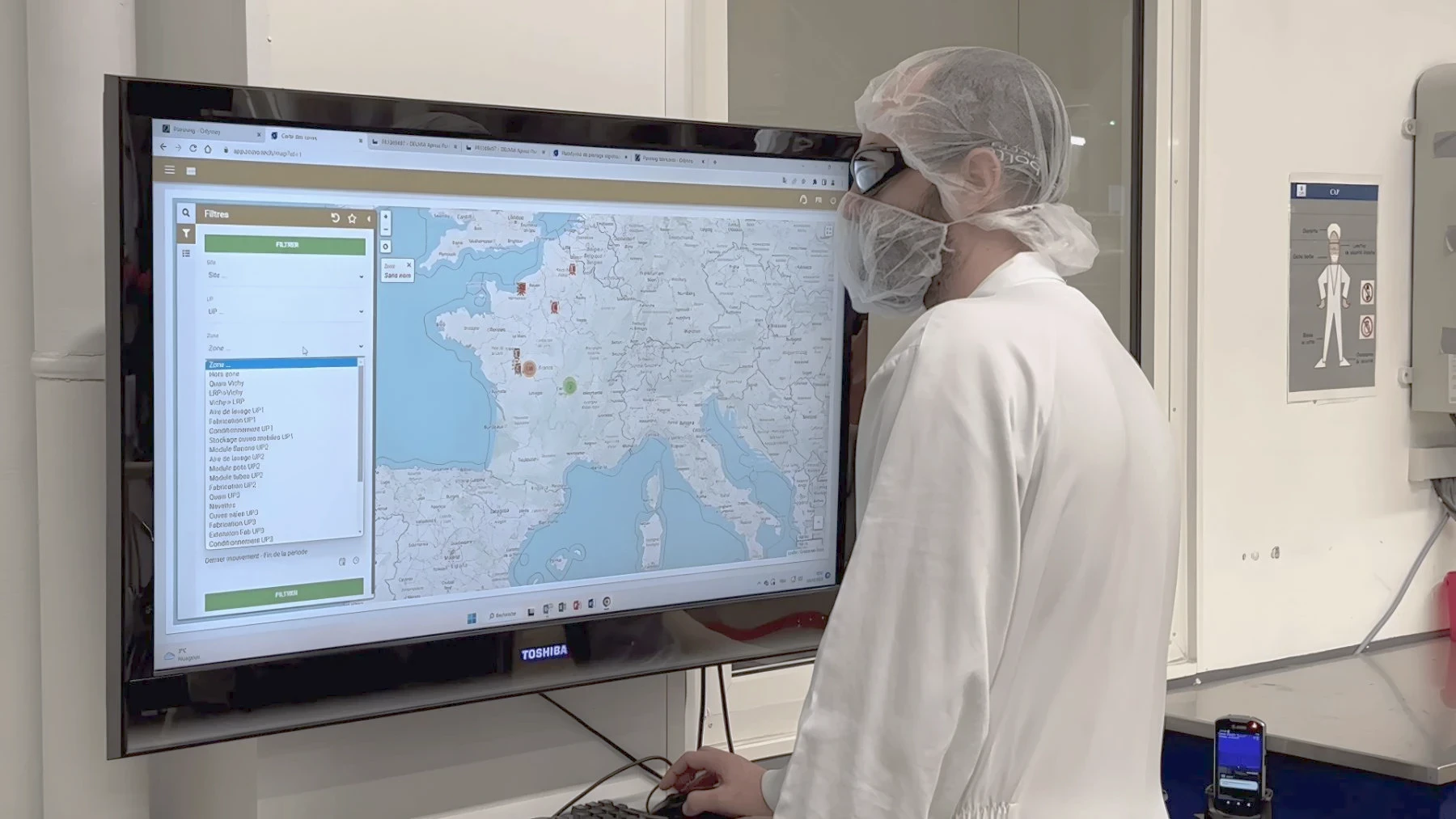
Your screen
What you see when you open a case.
The actual journey of the part, as it happened. Every line is timestamped and comes from the flow, not from a reconstructed declaration.
WO-8842 · Part history
Timestamped- 1Shop floor receipt — Entry zone02/09 at 07:12 · 1 h 40 waiting before first operationCompliant
- 2M2 machining02/09 at 08:52 · duration 2 h 38 against 2 h 00 of routingVariance +32 %
- 3Sealing — rework03/09 at 14:05 · NC-2214, second passRework
- 4Final inspection04/09 at 10:20 · compliant, case closedValidated
The same history feeds root-cause analysis: waiting time by zone, deviation from routing time, rework linked to its operation.
Under audit
What you can produce on request.
- A part's timestamped journey, with no reconstruction
- Rework rate by workstation and by period, based on flow data
- Waiting times by zone, which explain lead time drift
- A full export of your data, at any time
What ROBIN changes
Traceability becomes a by-product of production.
A file available immediately
The journey is recorded as production runs. Responding to an audit or a complaint no longer requires reconstruction.
Causes that become visible
Waiting time by zone, deviation from routing time, rework by workstation: root-cause analysis starts from flow data, not from testimonies.
Rework that no longer makes lead times drift
Rework is sequenced like a normal operation, with its quantified impact on customer milestones. It stops being a black hole in the schedule.
The results
What this looks like on a real shop floor.
The gains observed on a defined scope, and the customer case that documents them.
- 0 dof reconstruction: the journey is recorded as it happens
- 0added data entry: traceability comes from the flow
- < 2 minto reschedule rework with its impact on milestones
- −7%lead time reduction — observed on an aircraft repair shop floor
Customer case · Aircraft repair shop floor
Landing gear: 7% TAT gained without adding capacity.
A European MRO traces the actual journey of its equipment and reschedules its rework without TAT drift, on a landing gear shop floor.
Read the customer case- −7 %TAT on tracked equipment
- < 2 minto reschedule after a disruption
- 0rescheduling in Excel
The vendor
What you check before basing a quality file on a tool.
Your data stays under your control
European cloud hosting or on your own infrastructure, and export of your data at any time. No irreversible dependency.
Plugged into your IT systems
ROBIN connects to the ERP and the MES: manufacturing records and non-conformities stay where they are.
- SAP
- Sage
- MES
- CMMS
No per-user cost
Giving the whole quality team and auditors access to the history costs nothing extra.
A single point of contact
A ROBIN.Deploy project manager scopes the traceability perimeter with you and stays until you are self-sufficient.
Further reading
What we write for a quality department.
Dynamic scheduling · Thesis
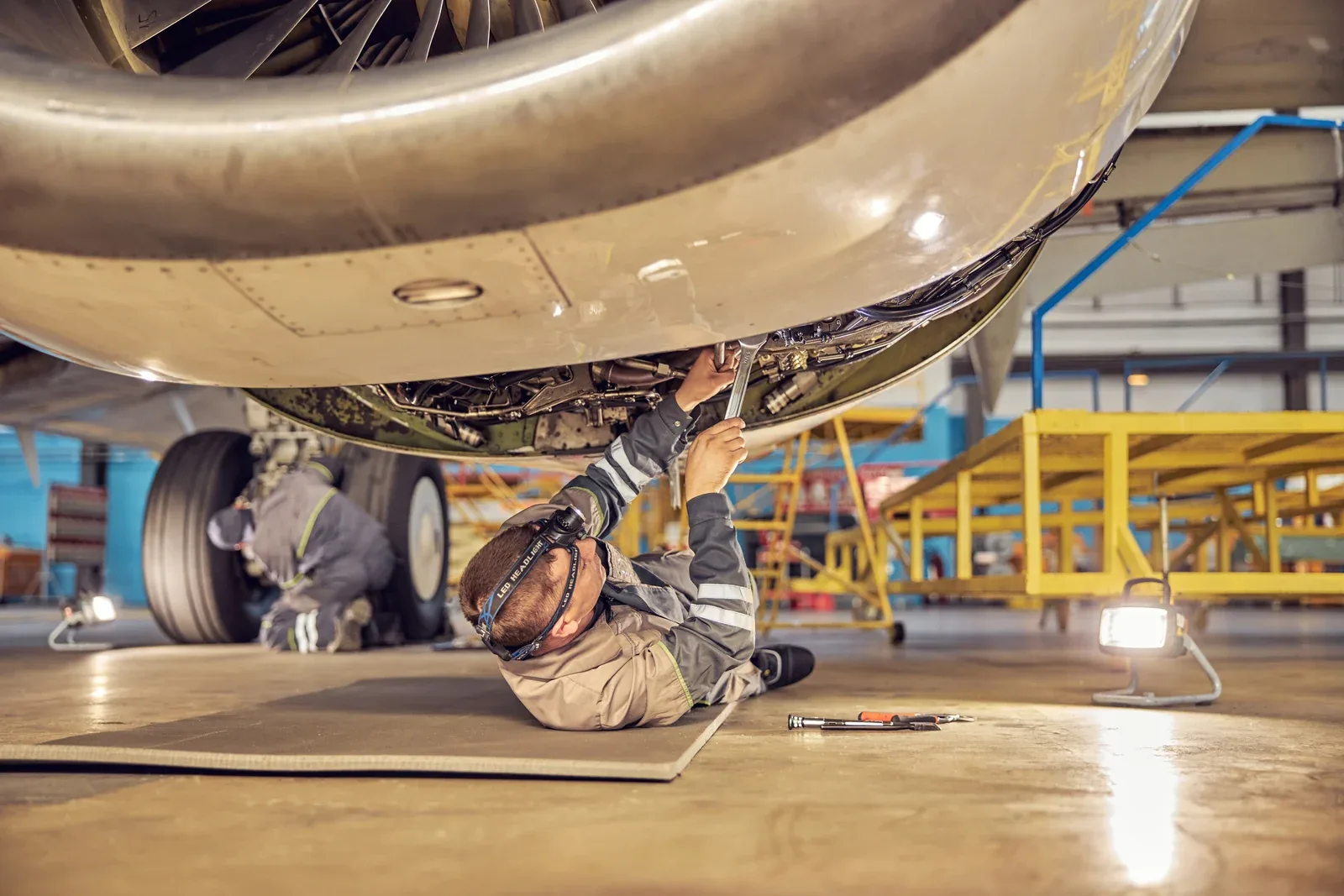
MRO scheduling: why static scheduling drags down your TAT
It is not variability that degrades TAT — it is the tool that pretends it doesn't exist.

Customer case · Aerospace
Reducing TAT on a landing gear shop floor
The project in detail: baseline, scope, measured results and deployment timeline.
FAQ · Quality
The questions we get in quality reviews
How is a part's journey recorded?
Is this admissible for an audit?
The history log is timestamped, viewable, and exportable. It documents the actual path and waiting times. It complements your quality file; it does not replace the regulatory records held in your business tools.
Does ROBIN manage our non-conformances?
No. Non-conformances remain in your quality tools. ROBIN links the rework back to the flow, reschedules it as an operation, and measures its impact on customer milestones.
Can rework be tracked by cause?
Yes: by workstation, by period, and by reason, based on operations actually carried out. Recurrence identifies the operation or work instruction requiring rework.
Is it used to monitor operators?
No. ROBIN tracks parts, tools, WIP and equipment, not people. Metrics are produced by workstation and by flow, never by individual.
How long does it take to equip a pilot scope?
Less than 3 months from signature to go-live, sensor installation included. Deployment happens in phases, building by building for example, then extends at your teams' pace. A ROBIN.Deploy project manager is on site during commissioning.
Take action
A part journey you can read, not one you have to reconstruct.
We come to see your flow, define the zones to trace and set a pilot scope with your teams.