
Role · IT / CIO
One more tool means one more interface to maintain.
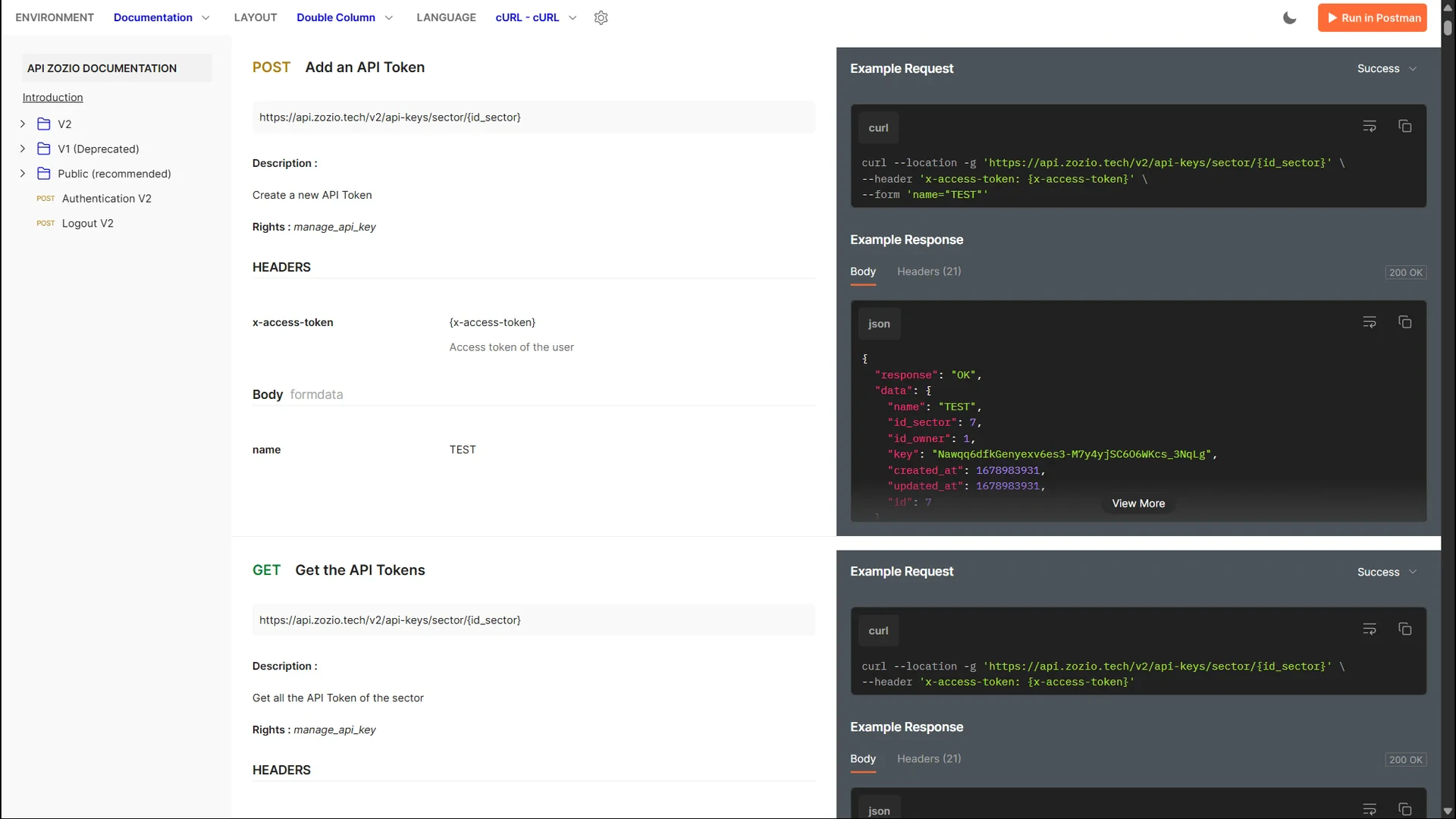
ROBIN connects to your existing IS via documented APIs: ERP, MES, CMMS. Nothing is replaced, nothing is duplicated. Hosting is European or on your own infrastructure, your data is exportable at any time, and business teams configure their own rules without going through your teams.
They have already connected ROBIN to their IT






The three figures
Three figures are enough to judge a business tool.
These are the ones you look at in the architecture committee, and the ones that recur throughout the rest of this page.
APIDocumented REST
What you plug into
A versioned public API, with its documentation and access tokens. No black-box connector to keep alive.
WorkloadIT team
What it costs you
The person-days spent integrating, then maintaining the integration. This is the real cost of a new tool.
Exportreversibility
What you get back
The ability to extract your data at any time, in a usable format. This is what makes the decision reversible.
Your challenges
Three things that make a shop floor tool fail.
They recur in every industrial IT landscape, whichever ERP is in place.
One more component in an already crowded IT landscape
Every business tool arrives with its own interface, its own format and its own debt. The industrial IT landscape ends up a spider's web that nobody can change safely any more.
Answer — ROBIN.Intégrations
- REST APIv2
- ConnectorsSAP · MES
- Duplication0
ROBIN reads what already exists and sends back progress. The ERP remains the reference for work orders and routings.
Industrial data can't just go anywhere
Drawings, routings and production rates are industrial heritage. A SaaS outside Europe, or without a reversibility clause, is a matter for the committee, not a procurement detail.
Answer — hosting and reversibility
- European cloud hosting or on your own infrastructureYour choice
- Full export of your data, at any timeReversible
French software vendor. Your data leaves in a usable format, without any intervention from us.
The shadow IT you can't secure
When the official tool can't keep up, the shop floor goes back to Excel. These files carry the real production, outside backups, outside access rights, outside audit.
Answer — a tool the business keeps alive
No IT ticket- Business rule
- Configuration
- No dev
Scheduling rules can be changed by the production teams. Your developers are not in the loop for day-to-day adjustments.
The product
ROBIN, the platform that runs the shop floor in real time.
ROBIN has five modules. The one that concerns you first is the integration layer.
ROBIN.Integrations
Plugged into your IT landscape, without replacing it.
ROBIN's integration layer: documented REST API, ERP, MES and CMMS connectors, no-code workflows.
- Versioned, documented REST API, with scope-based access tokens
- SAP, Sage, MES and CMMS connectors — the ERP remains the reference
- European cloud hosting or on your own infrastructure
The calculation
What interfacing costs you every year.
An interface is not a one-off project: it is an asset to maintain and retest with every version upgrade. Enter your orders of magnitude.
Your IT landscape
Assumption: half of the production-related exchanges taken over by the ROBIN API. Order of magnitude — the actual scope is defined during the diagnostic, with your teams.
Your IT landscape
What you are committing to.
- A documented, versioned REST API with scope-based tokens
- European cloud hosting or on your own infrastructure
- Full export of your data, at any time and without our help
- A pilot in production in under 3 months, within a defined scope
What ROBIN changes
The business tool stops being an IT issue.
Nothing to replace
The ERP keeps the work orders, routings and material requirements. ROBIN handles detailed scheduling and real-time data, which those systems cannot produce.
The business moves forward without you
Constraints, priorities and release rules are configured by the production teams. Your developers are not in the loop for day-to-day adjustments.
A reversible decision
Hosting of your choice, full export, open API. Leaving ROBIN remains possible — which is what makes adopting it acceptable to a steering committee.
The results
What it delivers on a real shop floor.
The gains observed within a defined scope, and the customer case that documents them.
- API v2Documented, versioned REST, with access tokens per scope
- 0duplicated data: the ERP remains the reference
- EUEuropean cloud hosting, or on your own infrastructure
- < 3 monthsfrom signature to production on a pilot scope
Customer case · Aircraft repair shop
Landing gear: 7% TAT gained without adding capacity.
A European MRO connects ROBIN to its existing IT system: the ERP keeps the work orders, ROBIN takes over scheduling and WIP location.
Read the customer case- −7 %TAT on the equipment tracked
- < 2 minto reschedule after a disruption
- 0rescheduling in Excel
The vendor
What you check before opening access to your data.
Your data stays under control
European cloud hosting or on your own infrastructure, and export of your data at any time. No irreversible dependency.
Plugged into your IT system
ROBIN reads the ERP, MES and CMMS through a documented API, and replaces none of them.
- SAP
- Sage
- MES
- CMMS
No per-user cost
Opening access to an entire shop floor does not trigger a licence renegotiation. The budget does not depend on the number of accounts.
A single point of contact
A ROBIN.Deploy project manager scopes the flows with your teams, documents the exchanges and stays until you are autonomous.
Further reading
What we write for an industrial IT department.
Dynamic scheduling · Thesis
MRO scheduling: why static scheduling drags down your TAT
It is not variability that degrades TAT — it is the tool that pretends it does not exist.

Customer case · Aerospace
Reducing TAT on a landing gear shop floor
The project in detail: baseline, scope, measured results and deployment timeline.
FAQ · Information systems
The questions we get asked at architecture committees
How does ROBIN connect to our ERP (SAP, Sage…)?
Through a documented, versioned REST API with scope-based access tokens. Standard connectors exist for SAP, Sage and the leading MES and CMMS platforms. The ERP remains the reference for work orders, routings and material requirements; ROBIN takes over detailed scheduling and real-time operations. It co-pilots, it does not replace.
Where is our data hosted, and does it stay confidential?
Your data belongs to you and is never shared. ROBIN is available as SaaS, hosted in the cloud in France, Europe or the United States (GDPR compliant), with a separate environment for each customer. It can also be installed on your own servers if your security policy or a defence context requires it. Zozio is a French software publisher: the hosting choice is contractual.
Can you retrieve your data if you cancel?
Yes, at any time and without our involvement: full export via API or file, in a usable format. Data portability is written into the contract.
What is the workload for the IT team during deployment?
Scoping the data flows and opening access. The business configuration — constraints, priorities, routing rules — is carried out with your production teams, not your developers.
Should we replace our MES?
It depends on what your MES covers. ROBIN can connect to your existing MES, or take over work order management if you don't have one: releasing and tracking work orders, progress reporting by operators, time spent and operation traceability. Plus dynamic finite-capacity scheduling and real-time location of WIP.
How are access rights managed?
By scope and by role, with separate API tokens. There is no per-user cost: opening access to an entire shop floor does not affect the budget, so security is never traded off against licences.
Take action
A business tool that doesn't become your technical debt.
Send us your application map: we scope the flows and the integration perimeter with your teams.