
Use cases · Optimise resources
How can you improve productivity with the same equipment?
A manufacturing vat, a paint booth, an oven, a test bench: constrained, expensive equipment, in finite numbers. What's missing is visibility into how it is actually used — and operator workload planned in advance rather than allocated by gut feel.
- Industries — Cosmetics & luxury
- Scope — Two sites, vat rooms and packaging
- Modules — Tracking · Resource Management · Scheduling
- In production since 2020
 The clientL'OréalCosmetics and luxury — manufacturing vats and constrained equipment, in finite numbers.

Testimonials
What the shop floor says.
Faustine Liabastre — CAP L'Oréal
“Teams from another generation, not used to new technologies, quickly got to grips with the solution.”
Faustine Liabastre — CAP L'Oréal
“With Zozio, the production assistant, the manufacturer and the packaging technician all gain in quality of working life.”
Faustine Liabastre — CAP L'Oréal
“Zozio is entirely dedicated to its customers’ needs and addresses many challenges across our site.”
Context
The same problem across several sites.
We find the same pattern in cosmetics vat rooms, packaging and luxury pre-fabrication. Equipment is expensive, it comes in finite numbers, and shop floor performance depends on its actual utilisation rate.
Day-to-day before ROBIN
Workload allocated day by day, by gut feel.
- The equipment utilisation rate is unreliable, so it cannot be optimised
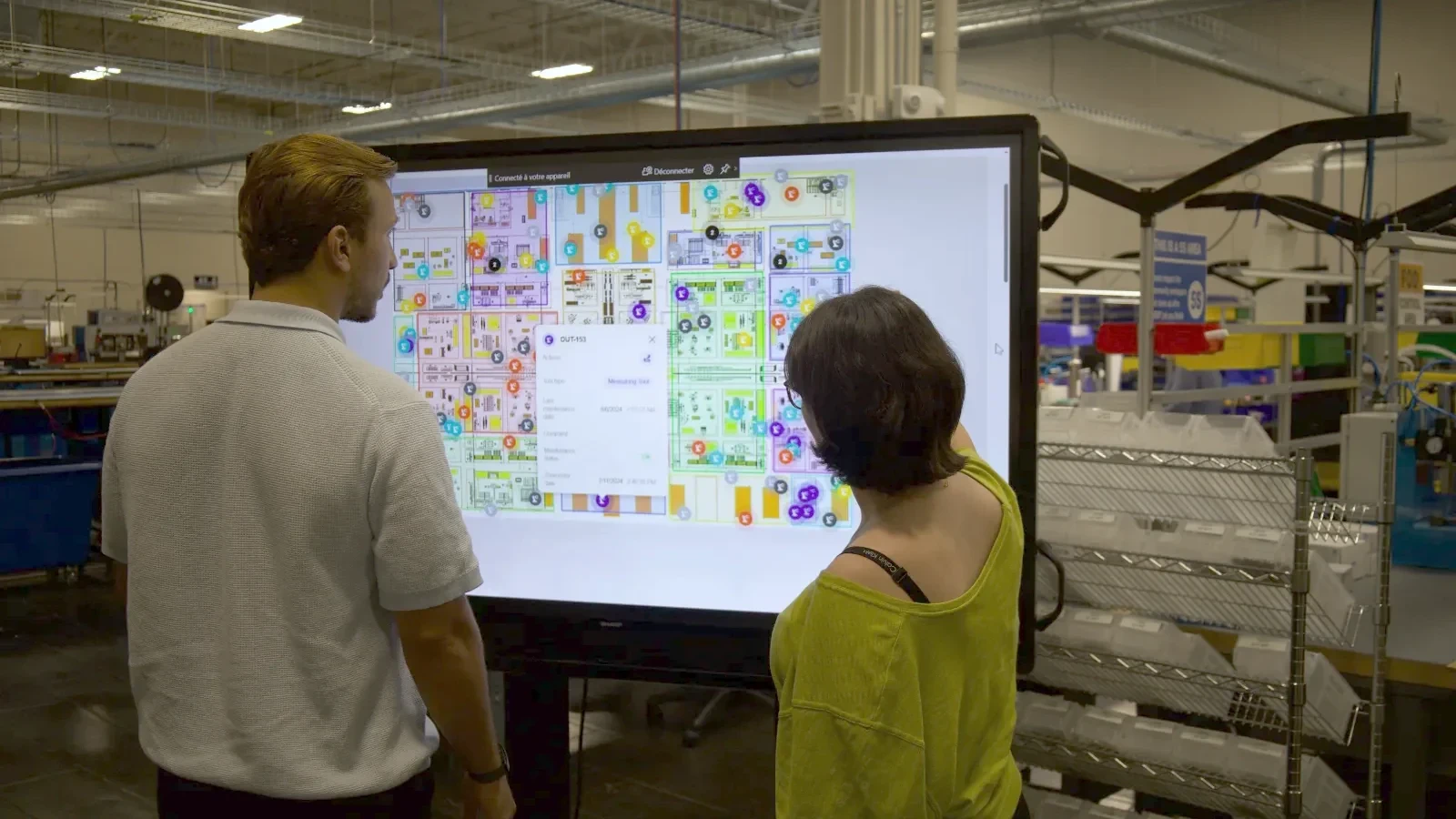
- Nobody knows where the mobile equipment is, or whether it is available — time is wasted searching
- Workload is calculated at infinite capacity: overloads are endured mid-month rather than detected at calculation time
- Operator assignment does not account closely for real skills and versatility
- Decisions to buy or rent additional equipment are made without data
Faustine Liabastre — CAP L'Oréal
“Zozio’s solution helps us track the hygiene status of our mobile vats more closely.”
Faustine Liabastre — CAP L'Oréal
“It is a complete, multi-service, multi-trade solution that helps us across our activity as a whole.”
Perfumes & cosmetics — manual management
Scheduling and load / capacity control done manually on ERP + Excel + PowerBI, with no link between the sources.
The Zozio solution
Geolocate the equipment so it can be optimised.
Optimising an equipment fleet always follows the same sequence, which is what makes the approach repeatable from one industry to another. Fleet tracking is not limited to geolocation: it combines status tracking — full, empty, dirty, sterile, in maintenance, at the subcontractor — with position tracking. Without status tracking, geolocation only tells you “where”; without geolocation, status tracking relies on partial self-reporting.
Building block 1 — Visibility
Make every piece of equipment visible
Fit every piece of mobile equipment with a tag and geolocate it in real time, indoors and outdoors. At a cosmetics leader, this vat-room geolocation building block has been in production since 2020 and has expanded every year.
- Fleet management and tracking, ERP/MES interconnection, alert beacons
- Indoor and outdoor geolocation, geofencing zones
- Management of remnants and of vats that have been with subcontractors for more than 3 months
- Alerts on regulatory dates, tag maintenance, self-service pairing
Building block 2 — Measurement
Measure the actual utilisation rate
Once geolocation is in place, optimisation indicators can be calculated automatically. No operator input is required.
- Number of cycles per piece of equipment over a given period
- Actual cycle time — min, max, average — per piece of equipment and per type
- Total idle time: the indicator that reveals the potential
- Real-time availability rate, in number of pieces of equipment and in capacity
- Average downtime at subcontractors
- Cross-table of cycles × duration: the overused and the ones lying idle
Building block 3 — Finite capacity
Moving from infinite to finite capacity
This is the shift that changes the scheduler's job. At infinite capacity, the tool places work orders (WOs) assuming resources will follow. At finite capacity, it refuses to place more than the machines, ovens and operators can absorb — and flags the gap.
- Optimisation of ovens and booths through smart grouping of WOs (batching)
- Immediate re-sequencing in the event of a disruption or rework
- Automatic assignment of orders to available, qualified operators
- Automatic calculation of the load / capacity ratio for each operation
- Quality rework integrated as full-fledged WOs
Building block 4 — Resources
Levelling the load: people in the model
Optimising equipment without operator workload gets you nowhere: the bottleneck moves, it does not disappear.
- Visualisation of training and multi-skilling — knowing who can do what, and at what level
- Immediate identification of qualified replacements in case of absence
- Leave, shifts and availability calendars, synchronised with HR tools
- Anticipation of machine stoppages and site closures
- Automatic KPI adjustment: OEE is recalculated when maintenance is planned
- Reduced dependence on single experts
What manual management costs
The most direct gain is also the most mundane: stop searching.
The business case built with the cosmetics teams puts the time spent searching for a vat at 20 minutes per day per person, across some twenty people concerned, and identifies 10 pieces of equipment per month saved through better fleet rotation.
Identified loss items — perfumes & cosmetics, two sites
Identified loss item | Order of magnitude |
|---|---|
Multi-tool management time (4 different tools) | 1 h per day for 10 people |
Labour left idle during production stoppages | 3 h per month × 19 packaging lines |
Manufacturing stoppages at the pre-fabrication site | 158 h per year across 7 automatic stations |
Targeted management gain on pre-fabrication | 1 FTE recovered |
These four lines are business-case assumptions built by Zozio, not validated client measurements. To be validated, or explicitly reclassified as “orders of magnitude estimated with the teams”.
Measured results
An optimisation project is judged on its lifespan.
Five years after the start on the cosmetics scope, usage keeps growing.
- 1 → 5types of objects geolocated and tracked, between 2020 and 2025
- 2 → 15 +use cases in production, across 4 units + maintenance + forklift drivers
- 3 → 42active dashboards, and 2 → 9 automatic alerts configured
- × 2platform usage over 12 months — page views × 4 on one production unit
The activity peak coincides with preparation for the year-end fragrance campaign: tracking follows the plant's real seasonality. On the fragrance & cosmetics scope, vat geolocation logs more than 500 user requests per month — a sign that the tool has become part of the daily routine.
- 5000assets managed across our clients — equipment, containers, geolocated WIP
- 50 000 +pages and KPIs viewed per month on the platform
- 2019first historic industrial client — then 2020 and 2021 for the following ones
The activity peak coincides with preparation for the year-end fragrance campaign: tracking follows the plant's real seasonality. On the fragrance & cosmetics scope, vat geolocation logs more than 500 user requests per month — a sign that the tool has become part of the daily routine.
The final building block
The connected electronic label closes the loop with the shop floor.
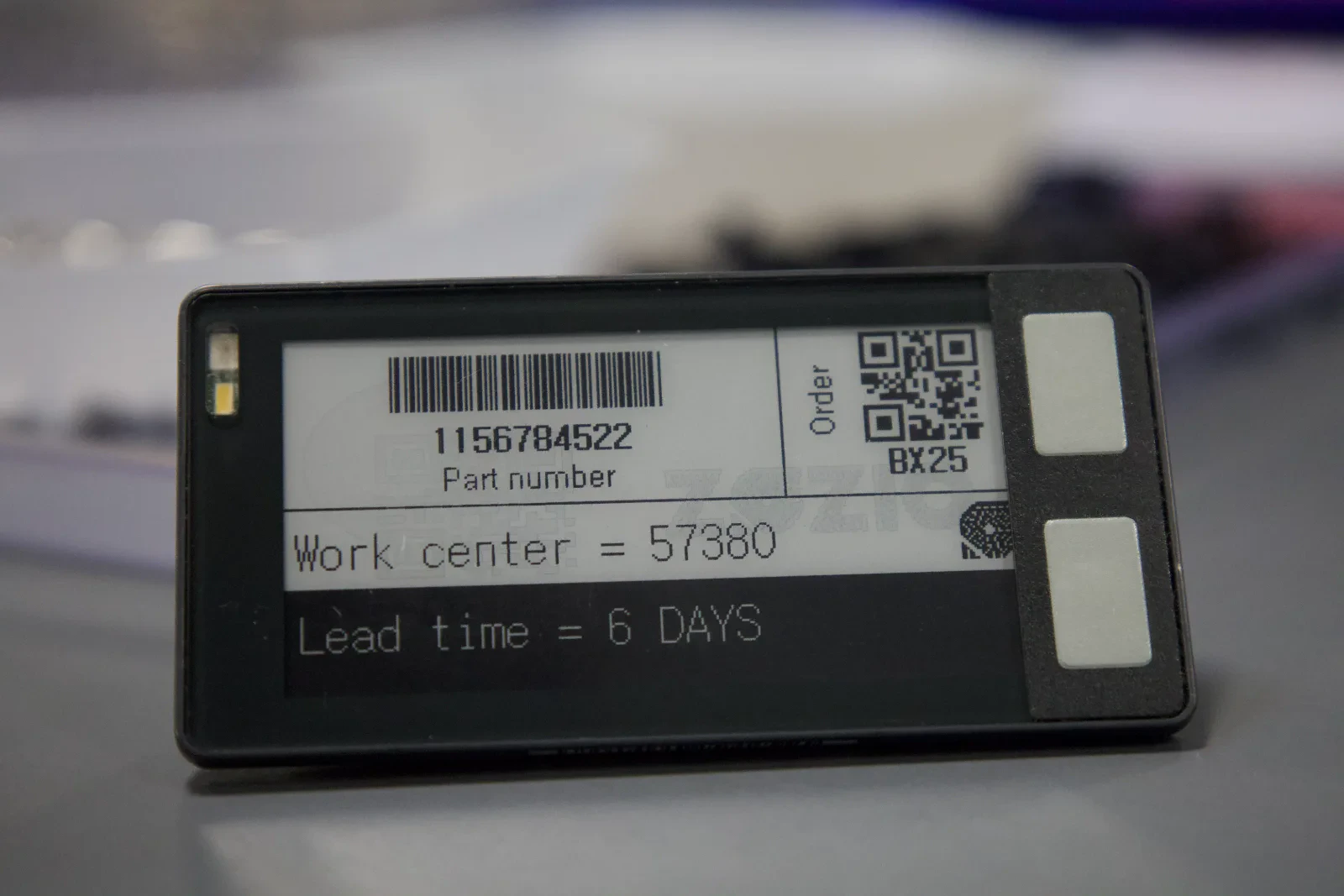
Once the load is levelled and the schedule recalculated, the shop floor still has to know about it — without reprinting a job traveller. The connected electronic label is attached to the equipment, the container or the work order. It is geolocated in real time and updated remotely.
- It displays up-to-date data on a work order, paperless
- It communicates the priorities or sequence changes decided by scheduling
- It carries a QR link to the technical documentation, in the right place at the right time
- It eliminates the paper job traveller and secures digital sign-off
On the cosmetics and luxury scopes, automated printing of subcontracting shipping labels already plays this role on the external flow, alongside shop-floor screens and RTLS tracking (not deployed as it stands at L'Oréal).
Before you get started
What these projects actually required.
The four questions every industrial management team asks before signing, and the answers as they were borne out on these scopes.
A continuous, gradual expansion
On the cosmetics scope, the tracked fleet has expanded every year since 2020: new units, geofencing, remnants, subcontracting, safety dashboards.
Your systems stay in place
ROBIN connects to your existing ERP, MES and production management system (GPAO), and synchronises with HR tools for leave, shifts and calendars.
Your rules, not ours
Colour-based sequencing, curing thresholds, booth fill rates, versatility matrix: the constraints are those of the shop floor, modelled with it.
Your data stays yours
Hosting in France, Europe or the United States, per-client segregation and GDPR compliance. On-premises installation remains possible.
Go further
Related use cases.
Animal health
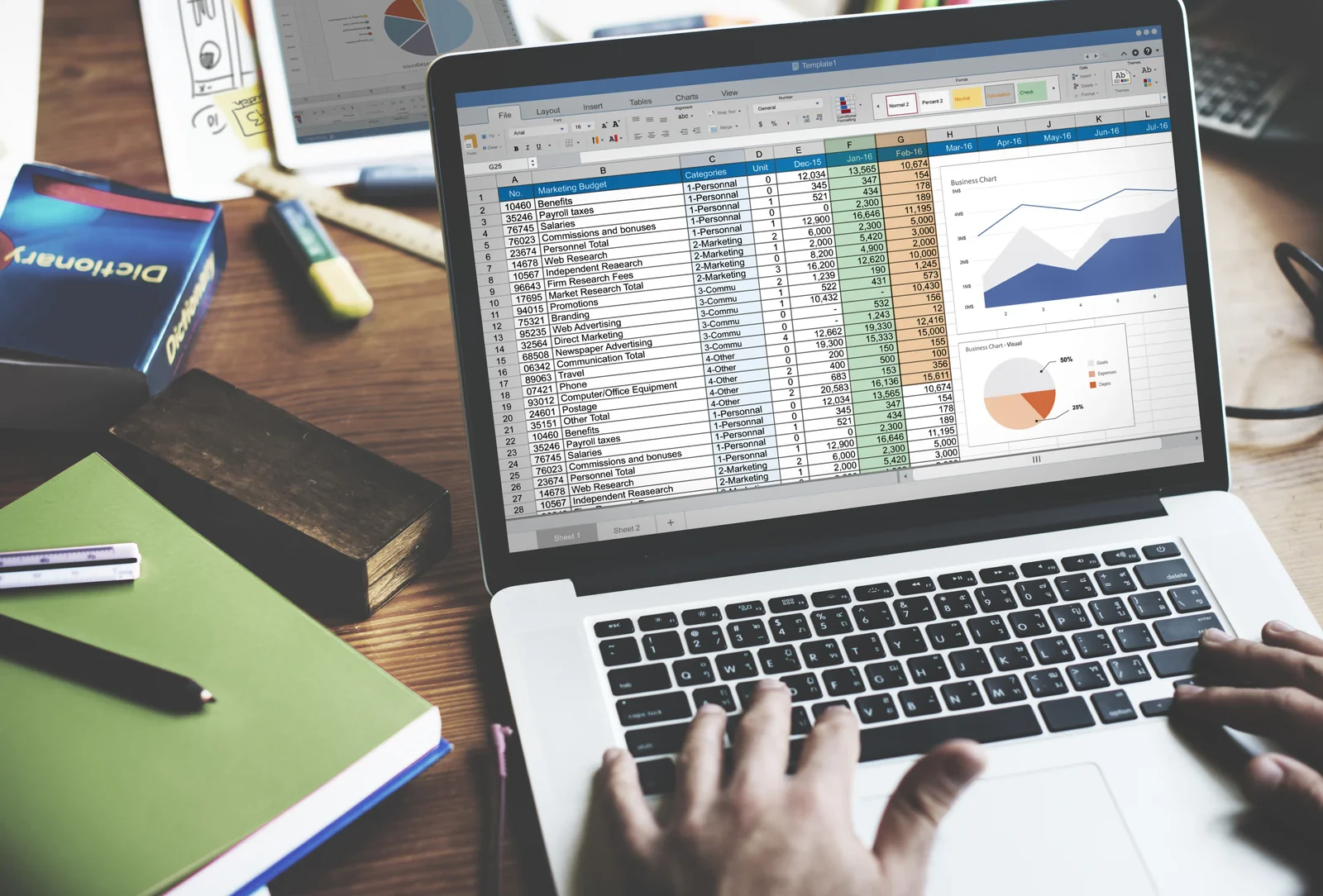
Moving beyond the Excel schedule
Excel is not the problem, it is the symptom. Shop-floor data first, then the schedule.

Aerospace MRO
Reduce TAT
TAT is not lost in working time, but in the queues nobody measures.

Industrial job shop
Improve your service level
Make delays visible before they happen: dwell-time thresholds, alerts and shared priorities.
Frequently asked questions
Equipment optimisation and load levelling.
Tracking, track & trace, geolocation: what's the difference?
Tracking follows a state and a progression: at which step, in which status, since when. Track & trace adds traceability, meaning the complete, auditable history of the item. Geolocation gives its physical position in real time.
A work order can be declared "awaiting inspection" (tracking) and have been sitting for three days in a forgotten buffer zone (geolocation): that is why a shop-floor project often needs all three.
How do you measure the actual utilisation rate of a production asset?
By geo-locating the asset and automatically timestamping its zone entries and exits. ROBIN derives the number of cycles, actual cycle time (min, max, average), total idle time, and real-time availability rate — both by asset count and by capacity. No operator input is required.
What is operator workload levelling?
It is the proactive distribution of work across operators and workstations so as to avoid overload peaks and troughs, taking into account actual skills, absences, shifts, and leave. Levelling requires finite-capacity thinking: overloads are detected at scheduling time, not discovered mid-month.
What is the difference between infinite-capacity and finite-capacity planning?
With infinite capacity, the tool schedules work orders on the assumption that resources will keep up. With finite capacity, it refuses to schedule more than machines, furnaces, and operators can absorb — and flags the gap. That is what turns a schedule into a decision-making tool.
Is geolocation used for optimisation, or simply for locating equipment?
Both — but the lasting value lies in optimisation. Locating a piece of equipment saves time immediately — 20 min per day per person in the cosmetics business case. Measuring utilisation rates enables you to guide investment decisions, identify bottlenecks, and plan ahead. And those gains compound.
What is a connected electronic label used for on the shop floor?
To carry the right information on the object, continuously and without paper. It displays the reference, batch, priority and next step; it updates remotely when scheduling recalculates the sequence; it flags urgent jobs, such as an AOG in MRO; it is geolocated in real time, so the object can be found at once; it carries a QR link to the documentation. It replaces the paper job traveller, removes the risk of an outdated version and secures digital sign-off.
Should we replace our ERP?
No. Your ERP remains the system of record for work orders, routings and bills of materials: it was designed for management, not for detailed scheduling. ROBIN connects to it through standard connectors (SAP, Sage and others) and takes over what it cannot do: dynamic finite-capacity scheduling and real-time shop-floor data (tracking, geolocation, actual progress).
The same goes for an existing MRO system: ROBIN pulls its work orders, routings and standard hours, and adds the layer it lacks. Your ERP investment is preserved.
Take action
What is an hour of oven or booth time worth to you?
Let's work it out together, on your fleet and your constraints.
30 minutes on your data · Reply within 24 hours · No commitment