
Industries · Aerospace MRO
In MRO, no aircraft ever enters in the expected condition.
Unknown operation times before diagnosis, emerging work, supply shortages: a static plan is obsolete before it is printed. ROBIN is built for this reality — not for a perfect facility.
They manage their operations with ROBIN



Industry challenges
It's not variability that degrades TAT. It's response time.
MRO variability is normal — it stems from product complexity. The problem is the tooling that pretends it doesn't exist.
Supply shortages
A shortage stops the job, and nobody finds out at the right moment.
Part numbers out of stock, slipping supplier lead times, incomplete kits, spare parts allocated across multiple work orders. Information flows by email and phone while the workstation waits. Without immediate re-sequencing around what is actually feasible, the shop floor improvises and delays spread silently all the way to delivery.
- Supply shortages
Skills shortage
Qualifications are the shop floor's real capacity.
Retirements, lengthy upskilling, operations reserved for a handful of certified technicians. A schedule that reasons in terms of workstations and machines systematically overestimates real capacity: it is the availability of qualifications, not equipment, that determines what can progress today.
- Skills shortage
Operations visibility
Nobody knows, at any given moment, what remains to be done or on which job.
Remaining work tracked on whiteboards and local files, progress reported at end of shift, parts physically impossible to locate on the shop floor. Team leaders spend their day reconstructing the actual state of the job instead of managing it — and decisions are made based on the memory of those who were there.
- Operations visibility
Variability & emergent work
The actual condition of a part is only known at diagnosis — and the routing is written afterwards.
Corrosion discovered on disassembly, dimensions out of tolerance, rework and scrap: operation times are inherently uncertain and the routing grows longer after launch. Generic APS systems, designed for stable routings, collapse in the face of this uncertainty — and scheduling reverts to Excel.
- Variability & emerging work
What ROBIN delivers
Scheduling that lives at the pace of the hangar.
Heavier-than-expected diagnosis, part number shortage, rework, absence: ROBIN recalculates the full sequence in under two minutes and communicates new priorities to the floor. The job progresses on what is genuinely feasible instead of waiting for the part.
Against disruptions and shortages
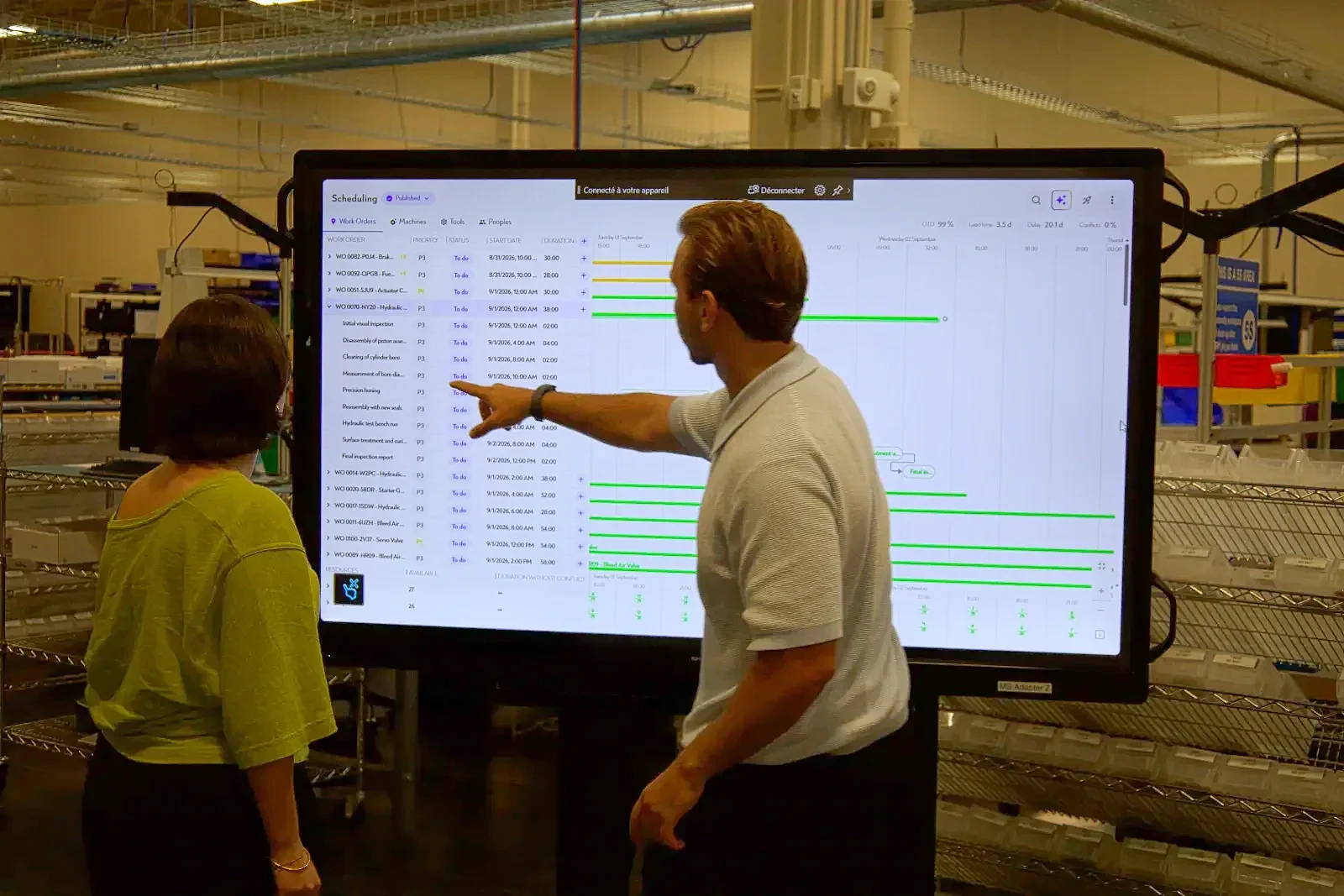
Dynamic rescheduling with every new piece of information.
Heavier-than-expected diagnosis, part number shortage, rework, absence: ROBIN recalculates the full sequence in under two minutes and communicates new priorities to the floor. The job progresses on what is genuinely feasible instead of waiting for the part.
- Automatic sequencing under real constraints — material, resource, qualification
- What-if simulation before deciding
- Upstream alerts: disruptions identified before they impact the delivery date
Against lack of visibility
WIP on a Kanban board, fed by WIP tracking.
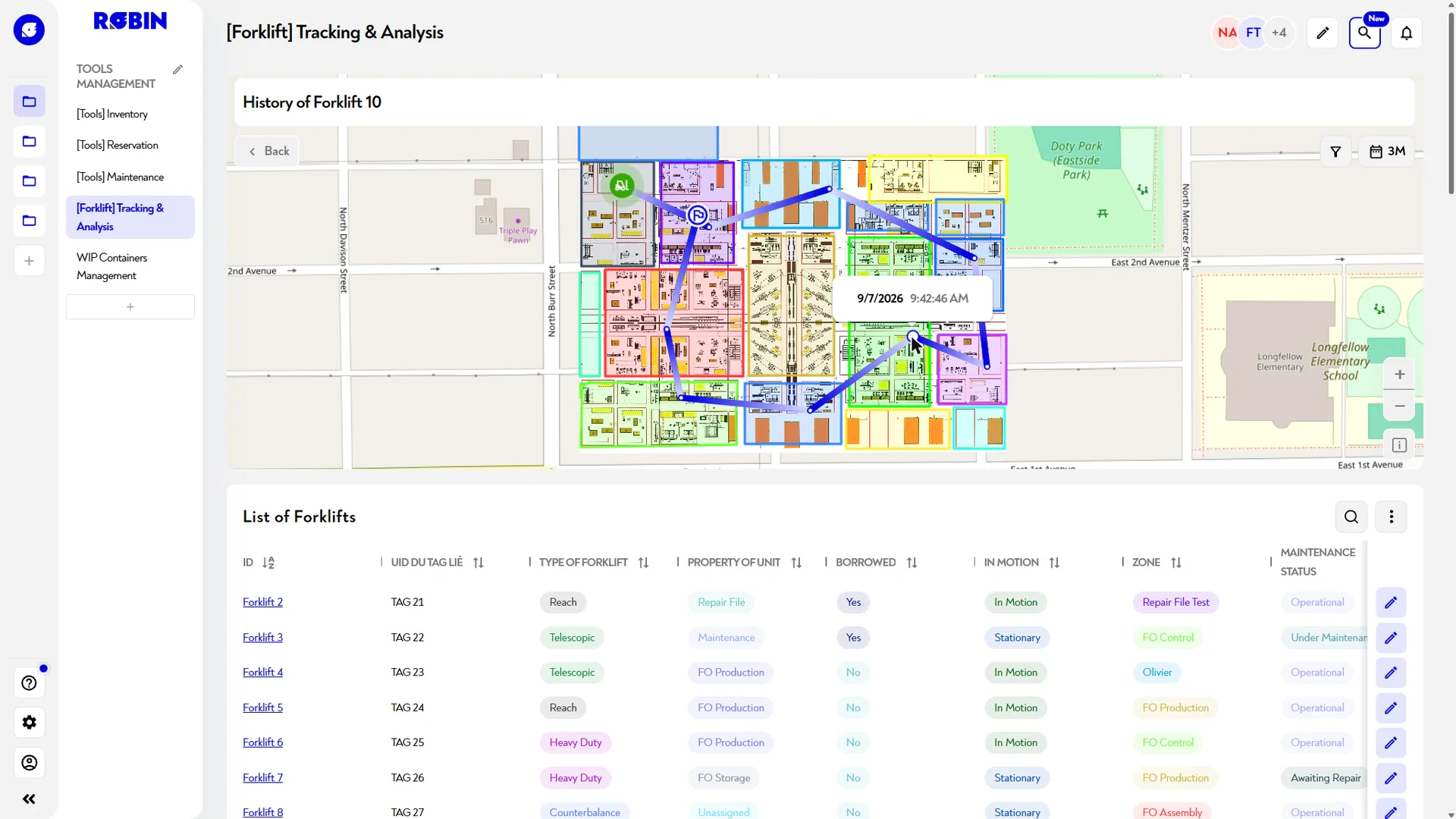
Each job appears on a Kanban board reflecting the actual state of the hangar: geolocation tracks work orders, parts and tooling without manual entry, and cards move columns as operations progress. The team leader reads the remaining work instead of having to reconstruct it.
- Kanban board by job, workstation and routing step
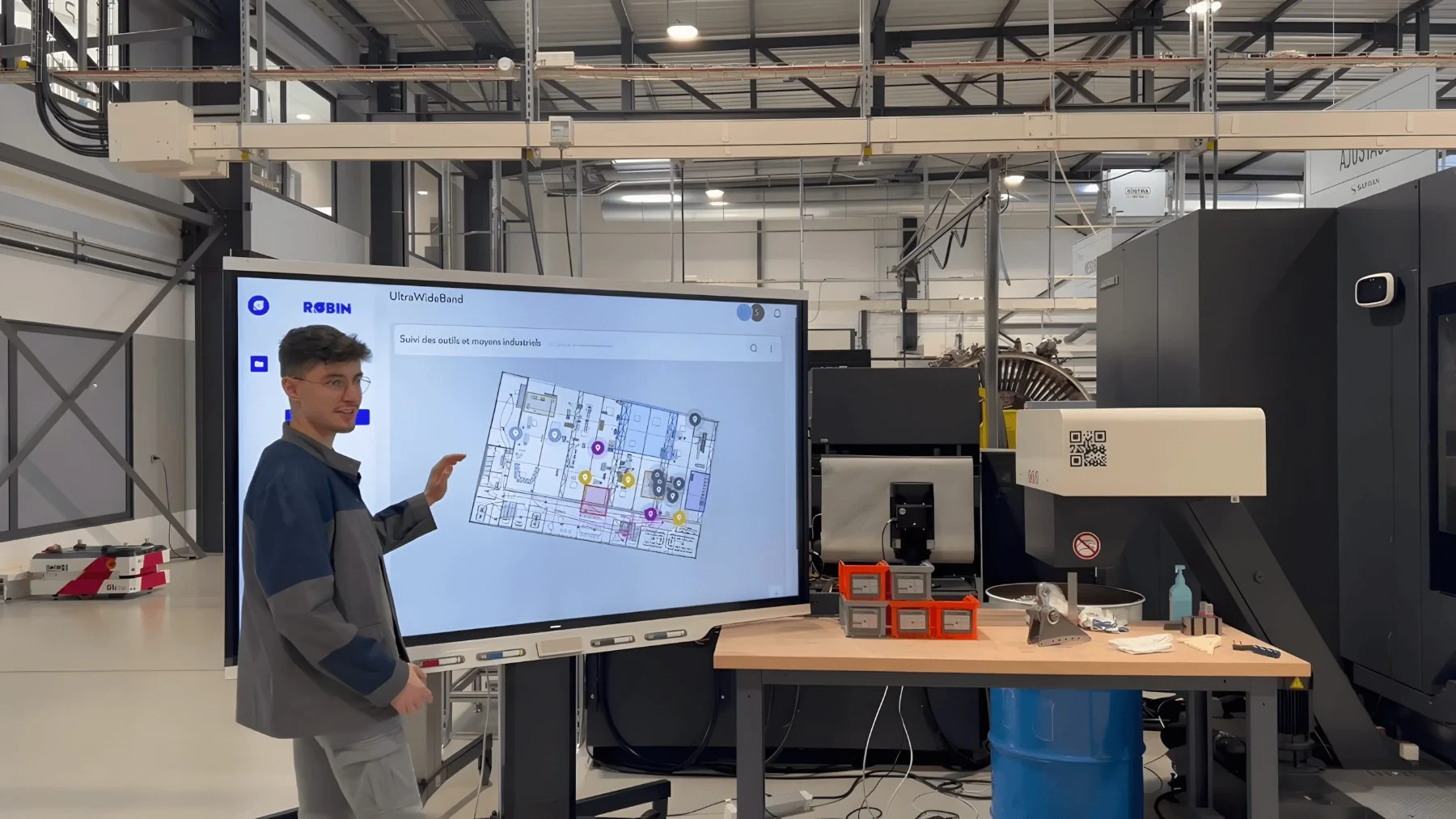
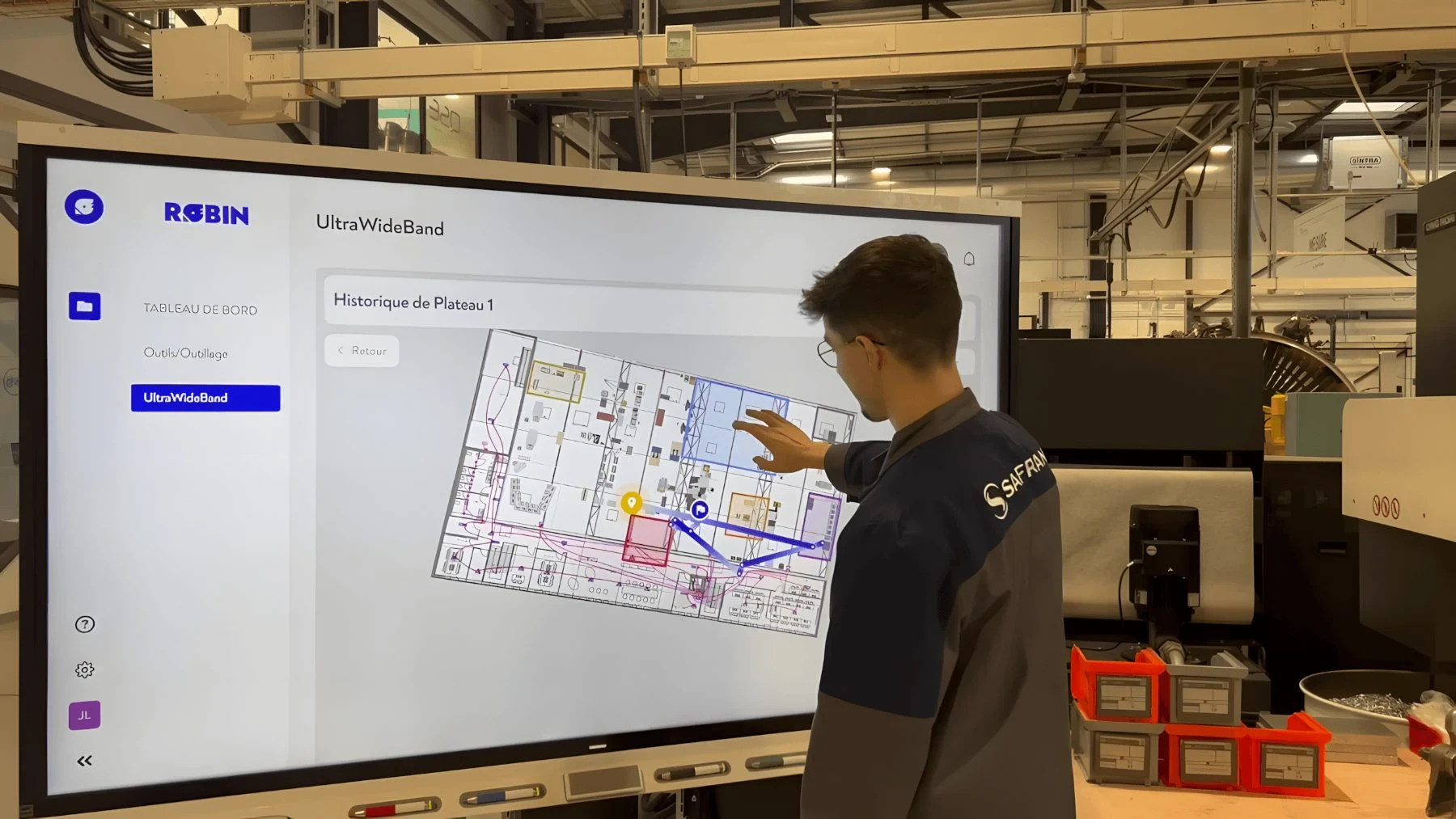
- Non-intrusive indoor / outdoor geolocation
- Full traceability — the black box demanded in aerospace
Against time variability
Every completed job makes the next one more accurate.
Our proprietary algorithms learn from past operations: actual times recorded by repair type, workstation and operator, frequency of emerging work, duration of delays. Theoretical routings gradually give way to observed durations, and client commitments are built on data rather than estimates.
- Operation times continuously calibrated against actuals
- Detection of recurring variances and their root causes
- Knowledge base preserved when teams change
Against the skills shortage
Scheduling reasons in qualifications, not just workstations.
Skills matrix, certifications and expiry dates, attendance and absences: ROBIN only assigns an operation to someone who can legally and technically perform it. Displayed capacity becomes real capacity, and skills bottlenecks are visible before they become a problem.
- Skills matrix and qualification validity
- Availability, leave and shift patterns integrated into sequencing
- Load by critical skill, visible in advance
Against unavailable resources
Test benches, tooling and inspection equipment are scheduling constraints, not afterthoughts.
A test bench already booked, a specific tool out on another job, a measuring device whose calibration expires next week: these elements determine what can be started just as much as skills do. ROBIN treats them as full resources — availability, location, calibration date and maintenance windows all feed into sequencing.
- Equipment and tooling pool tracked in real time
- Calibration and requalification dates that block assignment
- Preventive maintenance scheduled in capacity troughs, not against them
They use it

Our big focus is data-driven transformation: reducing our carbon footprint, optimising our productivity, and securing business diversification — working on drones right now, for example. One phrase that has really stayed with me, from Yves Dubreuil at Renault: “When the only tool you have is a hammer, you see every problem as a nail.
 Landing Systems · MROAll testimonials
Use cases
What MRO shops come to us for.
Three situations that overhaul hangars bring to us most often, and how ROBIN handles them.

Reducing TAT
Jobs sequenced on actual times rather than standards, idle time eliminated between operations. Contractual TAT is met without adding capacity.
Read the case studyManaging disruptions
Emerging work, missing part numbers, absences: the plan recalculates in under two minutes and every workstation receives its new priorities.
See the use caseWIP visibility
Every asset located in the hangar, from receipt to return to service. A part awaiting action remains visible rather than falling off the radar.
See the use case
FAQ · MRO
Questions from MRO shops
Yes, provided it is designed for it. ROBIN does not assume fixed times: it reschedules with every new piece of information — diagnosis, actual progress measured by tracking, emerging work. Accuracy improves with use.
Our operation times vary a lot — is that a problem?
No. ROBIN does not assume fixed durations: times are defined per operation-reference pair, and the plan is recalculated with every new piece of information (diagnosis, actual progress measured by tracking, emerging work). Actual times are continuously compared with theoretical ones, and estimates become more reliable with use, with no extra data entry.
How does ROBIN connect to our ERP (SAP, Sage…)?
Through a documented, versioned REST API with scope-based access tokens. Standard connectors exist for SAP, Sage and the leading MES and CMMS platforms. The ERP remains the reference for work orders, routings and material requirements; ROBIN takes over detailed scheduling and real-time operations. It co-pilots, it does not replace.
Is regulatory aerospace traceability covered?
Yes. Every operation, every part movement and every rescheduling decision is timestamped and traced — the “black box” of the shop floor. The full history remains auditable.
What TAT gains can you expect?
Around 7% reduction observed on jobs managed with ROBIN — on a 10-day TAT, 17 hours saved per job. Not by working faster: by eliminating idle time and organisational errors that no one sees without an end-to-end view.
Take action
Is your TAT at the mercy of disruptions rather than absorbing them?
Let's talk about your hangar — a demonstration on your own data is possible within a few days.