

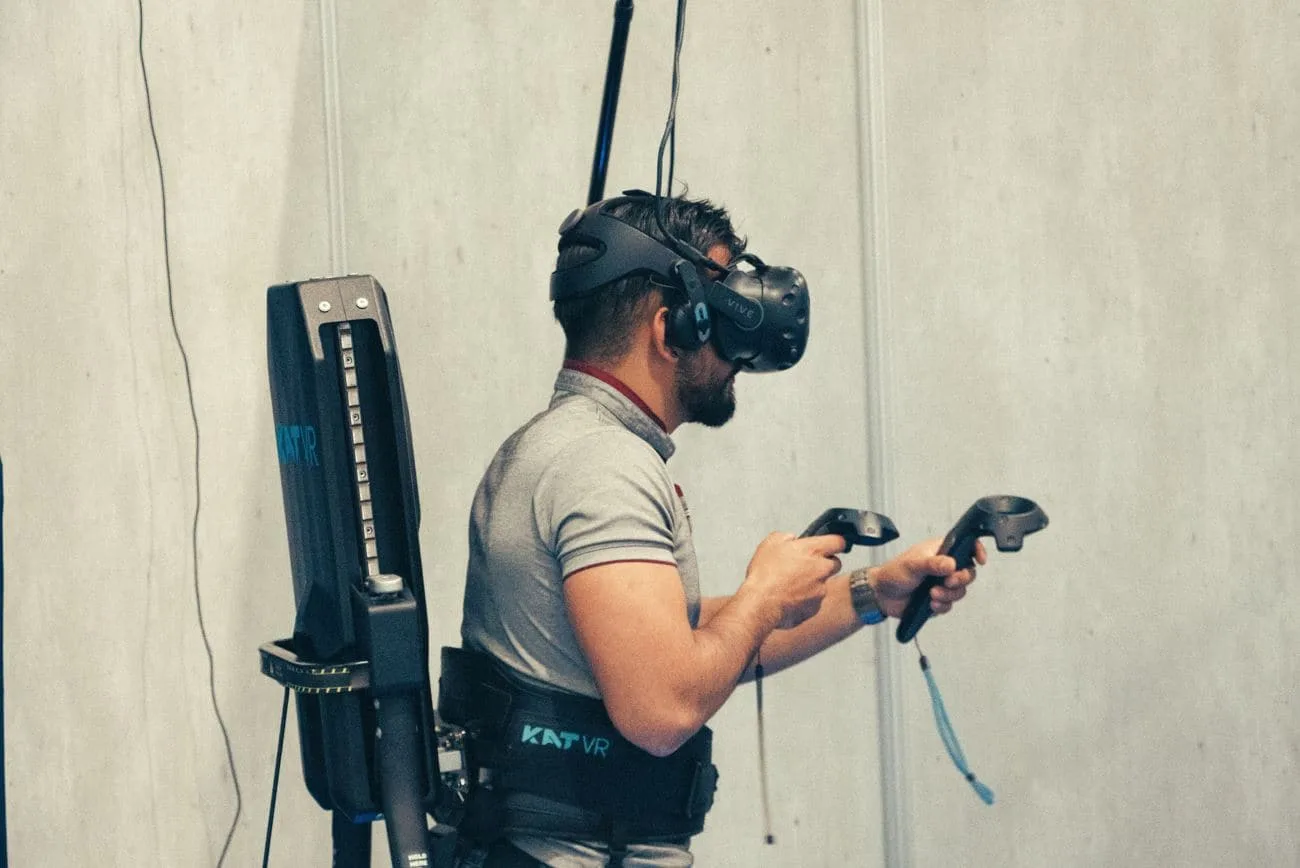
What is a digital twin?
As we have already discussed on this blog, a digital twin is a virtual clone of a physical system or process. The purpose of a digital twin is to represent the behaviour of the system it mirrors in real time.
In practice, IoT (Internet of Things) sensors are deployed in the field and continuously relay real-time data about the asset under study. The digital twin is therefore constantly fed by concrete data. The representation of the physical system is thus a living one, evolving in step with the asset on the ground.
Digital twins: what are they used for?
They have seen genuine growth since the early 2010s because digital twins contribute to improving the industrial performance of companies.
They can be used in many situations, but three of their most common applications are as follows:
- They can be used to predict how an industrial asset will evolve through the different stages of its lifecycle. This makes it possible to plan production-line activities against an optimised timescale.
- They can also prove extremely valuable in the area of safety. By running tests directly on the digital twin, it is possible to identify a risk of failure upstream and thereby continuously monitor equipment reliability. This has a direct impact on costs: by improving predictive maintenance capabilities and detecting breakdowns in advance, maintenance costs are optimised and production-flow stoppages become less frequent.
- Digital twins are also used to co-create equipment with the aid of augmented reality. They then become an indispensable decision-support tool.
A concrete example: modelling a production line
Let us look, through an example, at the value of a digital twin in a real-world scenario. The case studied is the deployment of a digital twin to improve a production line in a factory specialising in the manufacture of drones.
The first step consists of recording all the dynamic characteristics of each piece of equipment, such as their speeds. The production line is then modelled in suitable software. All movements of the production line are connected to the software in real time.
Tests are then carried out on the virtual clone of the production line by adding a second drone assembly station — a station that had previously been identified as a bottleneck. The new throughput is measured and the behaviour of the drones is studied taking into account different scenarios and production disruptions.
Based on the results of the tests carried out in the 3D environment, a decision is made as to whether or not to deploy this second assembly station. Since the consequences of the proposed change are known in advance, this saves time on the production flow by minimising production stoppages.
This type of test can be envisaged across many scenarios and for many different assets. Overall, a digital twin is a tool that can prove highly beneficial for industrial logistics and industrial traceability.
Investing in the deployment of a digital twin
The promises of the digital twin are therefore numerous and are already disrupting Industry 4.0.
Before investing in a digital twin, certain aspects must nonetheless be examined. In particular, it is important to assess the competitive advantage that deploying a digital twin can confer relative to the investment its deployment represents. The capacity of your IT systems must also be evaluated to ensure that their sizing is consistent with the introduction of such a technology.
The promises of the digital twin in Industry 4.0
As we have seen, deploying a digital twin can prove highly beneficial, particularly in the areas of logistics and industrial traceability:
- It makes it possible to avoid many disruptions that arise on a production line after it has been commissioned,
- It provides greater flexibility and thereby improves the overall throughput of the industrial asset,
- It contributes to improving the quality of the industrial asset by detecting potential deviations and system variability,
- It enables operators and maintenance teams to be trained before a system is deployed.
The optimisation of the learning curve and the reduction of production downtime make the digital twin a remarkable asset that, in addition to its benefits, is applicable to almost every industrial sector.
Read next
Interview
Cédéric Berg’s winning strategy as Plant Manager at Vetrotech Saint-Gobain
Development - Digitalisation - Reliability: a plant manager’s winning strategy For the past five years, Cédéric Berg has been at the head of one of t…
ZOZIO viewpoint
MRO Scheduling: why static scheduling tanks your TAT
It's not variability that degrades TAT — it's the tool that pretends variability doesn't exist.

Expert guide
What are the differences between a TMS and a WMS?
In this article, we will define what a TMS and a WMS are, and we will establish the advantages and differences that exist between these two systems.…