

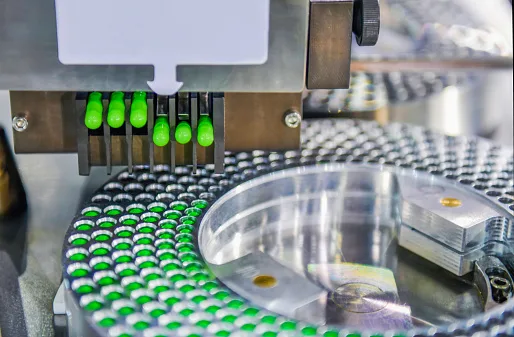
Digitalisation of Production, Regulation and Eco-Responsibility: Major Challenges and Multiple Imperatives for Pharma 4.0
The pharmaceutical industry has become highly competitive, operating in a rapidly growing market whose complexity is increasing at pace. As competition intensifies, regulations are becoming ever more stringent. Whereas regulators until recently accepted an annual product quality review, they now demand enhanced monitoring from manufacturers. Furthermore, the pharmaceutical industry — keen to demonstrate its commitment to eco-responsibility — must now manage its environmental footprint by actively engaging in emissions reduction.
Faced with these new challenges, we are witnessing a transformation of the pharmaceutical industry and the emergence of Pharma 4.0.
What is Pharma 4.0?
Pharma 4.0 is the term used to describe the application of Industry 4.0 specifically within a pharmaceutical manufacturing context. It was coined by the International Society for Pharmaceutical Engineering (ISPE) to accelerate the transformation of this industry by introducing specific digitalisation strategies.
In practice, Pharma 4.0 is characterised by:
- Greater use of connectivity,
- Increased productivity,
- Greater regulatory compliance,
- Greater flexibility and responsiveness.
The changes taking place in the pharmaceutical industry concern not only production processes but also the research and distribution sectors. These changes are underpinned by Big Data, the Internet of Things (IoT), Machine Learning, artificial intelligence algorithms, and robots.
The Challenges of Pharma 4.0
The pharmaceutical industry, like all other sectors, has engaged with digitalisation and automation processes to address a number of challenges it faces. These include performance and productivity optimisation, traceability requirements, quality, cost reduction, and regulatory compliance.
Moreover, the business model of pharmaceutical companies has evolved. They now champion an offering of innovative therapeutic solutions combined with personalised services. Whereas the pharmaceutical industry was initially focused on drug manufacturing, its digitalisation now makes it possible to improve customer service.
How to Digitalise Production?
To digitalise production and position a pharmaceutical company as a “Pharma 4.0” business, the first step is to assess the company’s current state in order to determine the priority areas for its transformation. During this phase, it is important to examine the technology infrastructure and available “cloud” tools, as well as to train staff on the new technological tools to be introduced.
Following this initial assessment, the next step is to move into the operational phase. Production digitalisation then begins, with the installation of the technology solutions best suited to the company's needs — chosen by management and staff alike. To maintain a continuous improvement approach, it will be essential to monitor the rollout and use of these solutions, so as to eliminate any potential resistance and malfunctions.
Digital Transformation of Pharmaceutical Factories: What Are the Challenges for Today and Tomorrow?
Digital transformation has brought major changes to pharmaceutical factories. In particular, it enables:
- Improved production
For example, the introduction of digital twins makes it possible to collect data from production lines, building a dynamic flow model to optimise processes. Instrumenting production equipment also improves predictive maintenance, enabling the anticipated shutdown of certain machines — such as ultracentrifuges used in vaccine production — which, in the event of a breakdown, can generate significant losses.
- Streamlined quality control
By digitalising working tools, product compliance improves and stronger communication is established between operators. Quality controls are also reinforced, as it is now easier to keep pace with evolving Good Manufacturing Practices (GMP), which are essential for maintaining a high level of quality.
- Optimised changeovers
Changeovers are a significant source of lost time and typically reduce productivity. Thanks to digital transformation, they can be completed far more quickly, improving the overall throughput of the entire production line.
The benefits of digital transformation are numerous. They include reducing raw material losses, cutting waste, improving operator efficiency, eliminating inefficiencies and variability, increasing productivity and profitability, and enhancing decision-making.
What Are the Limitations and Prospects for This Rapidly Evolving Industry?
As briefly mentioned, the digital transformation of the pharmaceutical industry is slow, owing to the sensitive and highly regulated nature of this sector. There is also considerable resistance stemming from the pharmaceutical industry's “traditional” culture.
Moreover, production is particularly difficult to transform, as every change to the production line must be documented and validated in advance. Indeed, the manufacture of a medicine demands flawless traceability, given its direct impact on human health.
This widespread resistance is slowing the sector's transformation. However, growing public interest in digital technology, combined with massive investment by GAFA players (Google, Apple, Facebook, Amazon) in healthcare and biotechnology, is enabling the sector to evolve.
As regulatory bodies begin to embrace it, the transformation of the pharmaceutical sector — with all its many benefits — is set to accelerate further.
Article written by Emma Guignard, Arts & Métiers student
Read next
Expert guide
MES or ERP: What Are the Differences Between These Two Solutions?
To boost productivity, many industries now use production management software. As continuous improvement tools, these systems have a significant impa…
Expert guide
8 challenges faced daily by cosmetics manufacturers
Challenge no. 1: Production scheduling To plan production with all the necessary information to hand, several prerequisites are required: Having exce…

Expert guide
How Are Industry 4.0 Trends Evolving in the Cosmetics Sector?
What Are the Current Trends in the Cosmetics Market? The cosmetics sector has been evolving particularly rapidly since the Industrial Revolution, wit…