

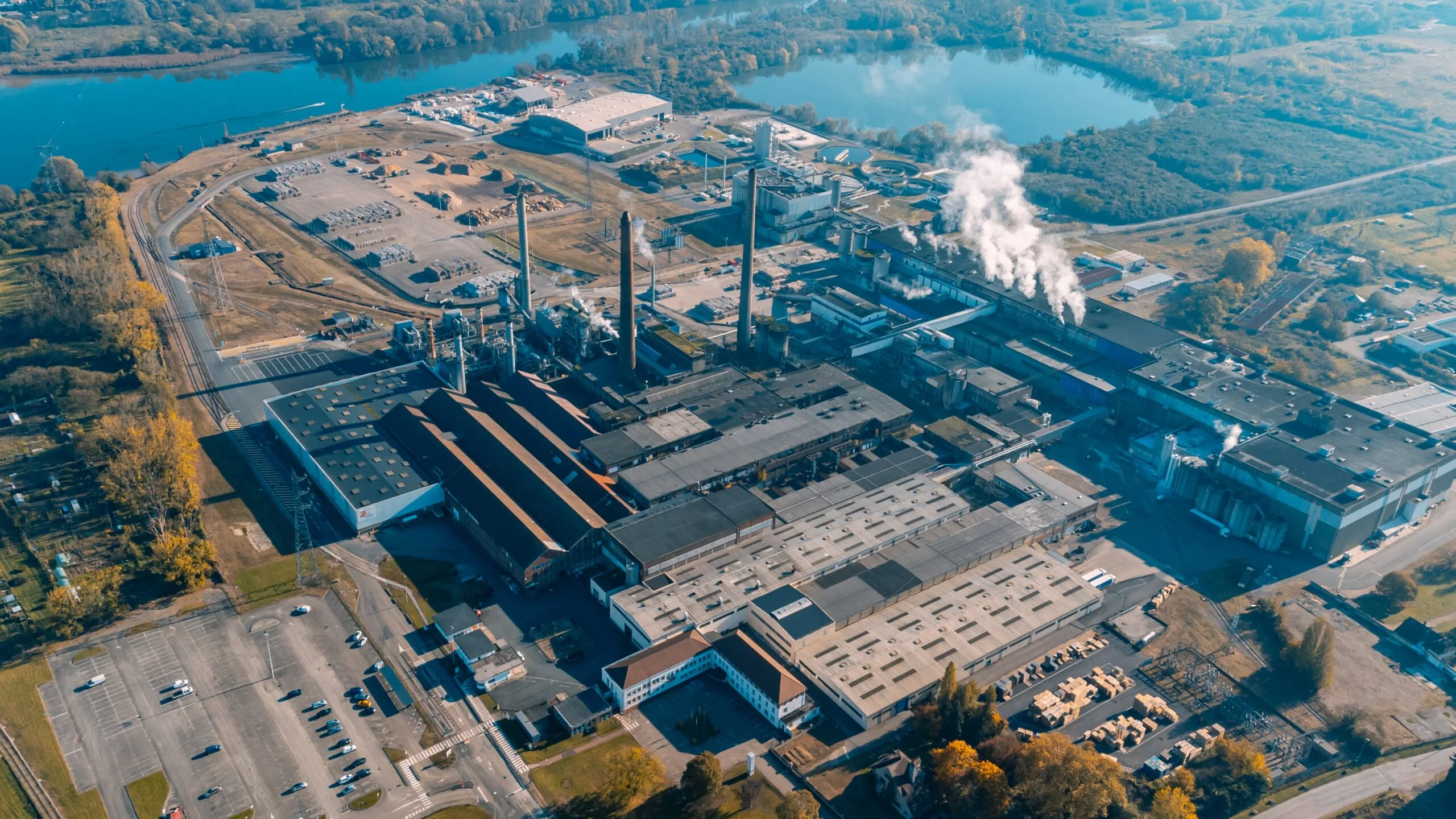
To remain competitive on the international stage and ensure its economic sovereignty and independence — particularly in times of crisis — France has set itself the challenge of reindustrialising its territory through a dual process of digital and environmental transformation.
What is reindustrialisation or industrial reshoring — and why does it matter? Industry plays a leading role in a country's wealth creation. Yet in France, the industrial workforce has fallen drastically, from 6.5 million people at the end of the Trente Glorieuses to 2.7 million today. This sharp deindustrialisation has had serious consequences for the economy, including high unemployment, a trade deficit, and very high social and public expenditure. Against this backdrop, France has set itself the goal of achieving reindustrialisation.
Reindustrialising France: A Project That Must Be Funded
Reindustrialisation can be defined as increasing industry's share of national wealth. To make this possible, France is launching a reindustrialisation plan.
The "France Relance" plan, announced by the government in September 2020, identifies four main objectives for the industrial sector: modernisation, innovation, reshoring, and decarbonisation. Under this plan, €35 billion is allocated to industry. Of this sum, grants are allocated to VSEs and SMEs (Très Petites Entreprises and Petites et Moyennes Entreprises — 86%), mid-sized companies (ETIs, Entreprises de Taille Intermédiaire — 10%), and large enterprises (4%).
Building on the France Relance plan, in October 2021, in the presence of 200 business leaders, French President Emmanuel Macron announced his "France 2030" plan — a €54 billion investment plan designed to close France's gap by creating new industrial and technological sectors.
The France 2030 plan pursues 10 objectives, some directly linked to industry, to address the challenges of our time:
- Develop small modular nuclear reactors
- Become the leader in green hydrogen and renewable energy
- Decarbonise industry in order to honour the commitment to reduce industrial greenhouse gas emissions by 35% by 2030
- Produce 2 million electric and hybrid vehicles
- Produce a low-carbon aircraft
- Invest in healthy, sustainable, and traceable food
- Produce 20 biopharmaceuticals targeting cancer and chronic diseases
- Position France at the forefront of cultural and creative content production
- Take part in the space adventure
- Invest in the field of deep-sea exploration
These objectives reflect France's desire to strengthen its industrial sovereignty. To achieve this — and despite having spent decades offshoring its factories — France is now committing to a process of industrial reshoring.
Industrial Sovereignty: The Theme of Industrial Reshoring
As the 2020 health crisis demonstrated, France remains highly dependent on trade with major European and international industrial nations. With €70 billion in public aid committed, the France Relance and France 2030 plans aim to encourage the reshoring of the industrial supply chain — or to create high-value-added sectors — in order to reduce France's dependence on foreign industries.
Reshoring is the process by which some or all of a productive activity is brought back to the parent company's country of origin after having been offshored. To encourage this process, France identifies and funds projects. This strategy runs in parallel with a tax strategy designed to attract foreign investors, who also play a key role in French and European reindustrialisation.
The Top Sectors of French Industry
To select projects for funding, France has defined top sectors of industry — that is, the key industrial sectors warranting particular attention. These top sectors include: automotive manufacturing, food and agribusiness, aeronautical manufacturing, and the luxury sector.
In the automotive manufacturing sector, production is facing significant changes due to the shift from combustion to electric. In France, output is declining and is being significantly outpaced by German and Chinese producers.
In the food and agribusiness sector, competitiveness and innovation are in decline, resulting in significantly lower exports, overtaken by German and Dutch producers. This sector has lost more than 20,000 jobs in 10 years and is in need of restructuring.
Aeronautical manufacturing, with its major firms such as Airbus, Snecma, and Dassault, is a strong industrial sector in France, with significant competitiveness.
The luxury sector plays a key role in the French economy and enjoys particularly strong international dominance, with 75% of its revenue generated through exports. Among France's major luxury companies are LVMH and L'Oréal — both clients of Zozio — as well as Kering and Hermès.
From these observations, it is clear that two of France's four top sectors are in need of restructuring. The rest of French industry also suffers from a significant lack of competitiveness, largely due to a shortage of mid-sized companies (ETIs). Indeed, ETIs are particularly important in research, exports, and robotisation. In France, there are three times fewer than in Germany and twice as few as in Great Britain.
In addition to large groups and ETIs, start-ups also play a key role in reindustrialisation.
Start-ups Contribute to Reindustrialisation
Start-ups are genuine levers for French reindustrialisation and sit at the heart of the government's strategy. The State has set itself the highly ambitious objective of creating one hundred new industrial sites per year by 2025. Tailored financial support and advisory strategies are being put in place to achieve this goal. To accelerate the process, there are even start-up creation studios, such as OSS Ventures.
France is seeing the emergence of start-ups such as Teeptrak (founded in 2014, it markets performance monitoring and disruption-tracking solutions aimed at operational excellence and improving production equipment utilisation) and Innovafeed (a biotechnology company specialising in insect farming for animal and plant-based nutrition).
To bolster its industrial sovereignty, France is multiplying measures to reshore its industries and reindustrialise the territory. In a context where entire generations have been distanced from manual trades, achieving these objectives requires a genuine restructuring of French industry, in the face of significant environmental challenges.
An article by Emma Guignard Photo credits: Jimmy Desplanques – Unsplash
Read next

Expert guide
The ATEX standard in the cosmetics and pharmaceutics industry
The pharmaceutical and cosmetic industry, due to the large quantity of chemical products stored and used in the laboratory and in the production area…
Expert guide
Jidoka: A Fundamental Method of Lean Manufacturing
Improving Product Quality by Detecting Anomalies in the Production Process What Is Jidoka? Jidoka is a Lean Manufacturing method whereby machines sto…
Expert guide
Short Interval Management (SIM): an Essential Lean Management Tool
What is Short Interval Management (SIM)? Short interval management (SIM) is a key Lean Management tool. Its objectives are to share common goals by d…