

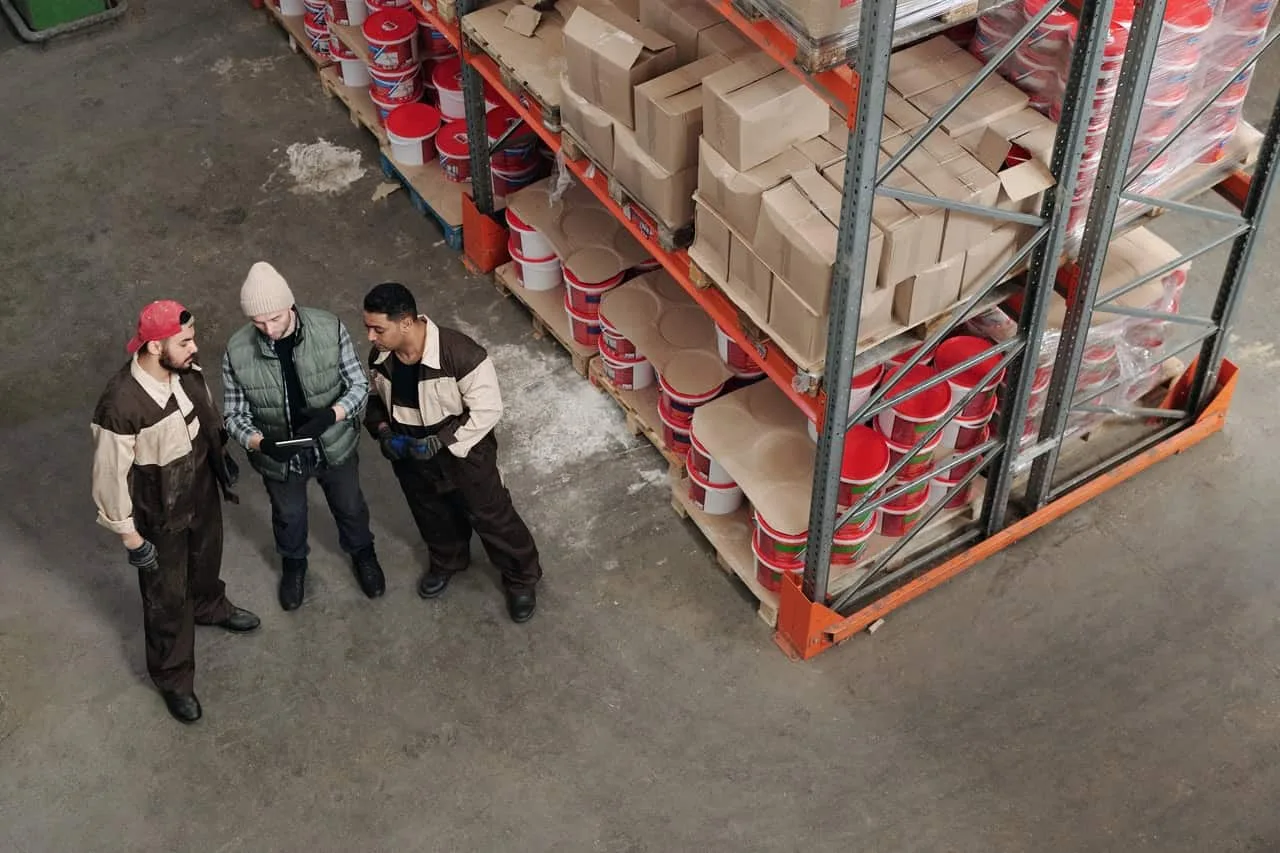
What is a bottleneck?
On a production line, a bottleneck is a workstation that receives more work than it can handle at its maximum production capacity. In other words, it is the production step with the lowest throughput rate in a production flow. For this reason, a bottleneck may also be referred to as a capacity constraint.
To illustrate this, consider a potter who shapes a vase on the wheel in 30 minutes, then places it in a kiln that can only hold one vase at a time, for 50 minutes. If the potter produces vases in series, he makes nearly 2 vases while the kiln fires only one. The kiln is therefore the bottleneck workstation, as it receives more vases than its firing capacity allows. Now imagine the kiln fires a vase in 30 minutes while the potter takes 50 minutes to produce one. The bottleneck then shifts to the potter's station. In this case, the kiln is underutilised and therefore not optimised.
Eliminating bottlenecks is one of the most effective ways to improve factory performance. Overall production output depends on the performance of the least efficient part of the system. Returning to the previous example, 1 vase will leave the potter's workshop every 50 minutes — reflecting the pace of the least efficient workstation.
Optimising logistical flows improves throughput, reduces production costs, and helps meet customer deadlines more reliably.
How do you identify a bottleneck?
To eliminate a bottleneck, you must first identify it, so that the appropriate corrective measure can be put in place.
A 3-step identification method is generally recommended:
- Track activity using visual indicators. Visualising the overall workflow — on a Kanban board or a value stream map — makes it easier to spot where tasks are piling up.
- Map queues at each workstation. On a production line, for example, a bottleneck will be visible at any workstation where upstream stock is significant.
- Measure cycle time at each stage. This step quantifies waiting times at each workstation and identifies capacity imbalances between the different stations.
How do you reduce bottlenecks?
Reducing a bottleneck sometimes requires simply allocating more labour or resources to the constraining workstation. For example, on a production line, if an assembly station is the bottleneck, it may be effective to add operators to that station, or to hire an additional quality assurance tester to reduce the workload on operators already in place.
Another highly effective way to reduce a bottleneck on a production line is to introduce buffer stocks, also known as Buffers.
A Buffer is a stock held at strategic points in the production line to stabilise flows and enable maximum-capacity operation, thereby limiting production drops. In manufacturing, this may mean keeping sufficient materials on hand to ensure smooth operations.
There are also other actions that can be taken to reduce bottlenecks:
- Keep the identified bottleneck running at full capacity. The constraining process must never remain idle, as it already has a negative impact on the rest of the production line due to its cycle time.
- Minimise pressure on the bottleneck. Work arriving at the constraining workstation must be of the highest quality, so that no rework is required at that stage — which would only extend the time spent there.
- Manage WIP limits. Following on from the previous point, it is important to define a WIP (work in progress) limit so as not to overburden the bottleneck workstation.
External constraints can also give rise to bottlenecks. For instance, a raw material shortage can quickly create a bottleneck at assembly stations and trigger a drop in production. This type of constraint is difficult to predict or mitigate, but demands a high degree of responsiveness and flexibility from the business.
Adopting a continuous improvement approach to optimise production at every production cycle
It is important to note that once a bottleneck is identified and resolved, a new bottleneck will inevitably emerge on the production line.
Take the case where the potter produces a vase every 30 minutes and the kiln fires one vase every 50 minutes. To improve the performance of the bottleneck station, the potter may decide to purchase a second kiln and thus fire 2 vases at once. In this case, the potter automatically becomes the new bottleneck, because in steady-state operation, a vase will now leave the workshop every 30 minutes — reflecting the potter's own production time per vase.
This is why it is important to adopt a continuous improvement approach — to progressively reduce constraining workstations at each production cycle.
Read next
Event
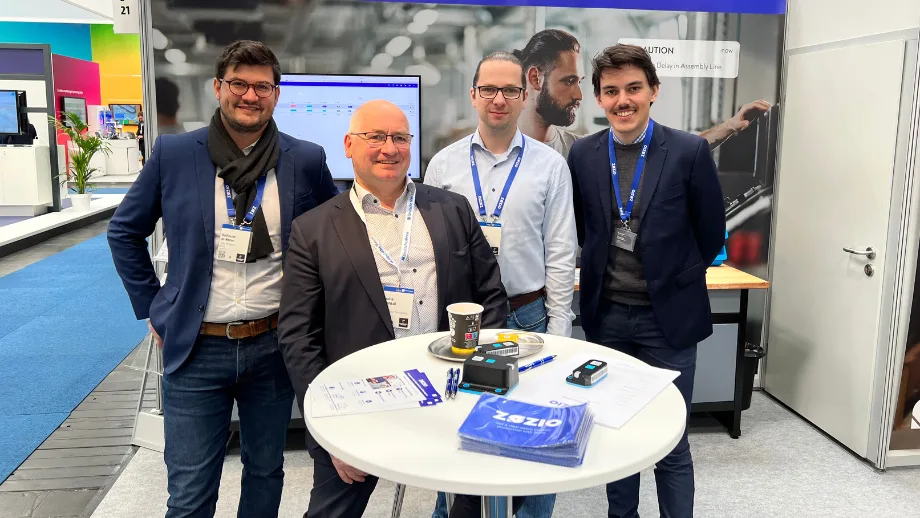
Hannover Messe 2023: Looking Back on a Successful Debut for Zozio
A Guided Tour of Hannover Messe 2023 with Zozio Hannover Messe – or the Hanover Fair – is the world's leading gathering for international industry ex…
Partnership
Partnership: Zozio, Simac and Fokker Services Group join forces to build the Next-Generation Digital Twin Technology for MRO Management
A Cutting-Edge Solution for Maintenance, Repair and Overhaul (MRO) Thanks to its integration partner SIMAC IT, Zozio and Fokker Services Group have j…

Expert guide
From Traditional Lean to Digital Lean: What Changes for the Business?
The Birth of Digital Lean Traditional Lean Management is a work management and organisation method aimed at improving business performance . It was c…