

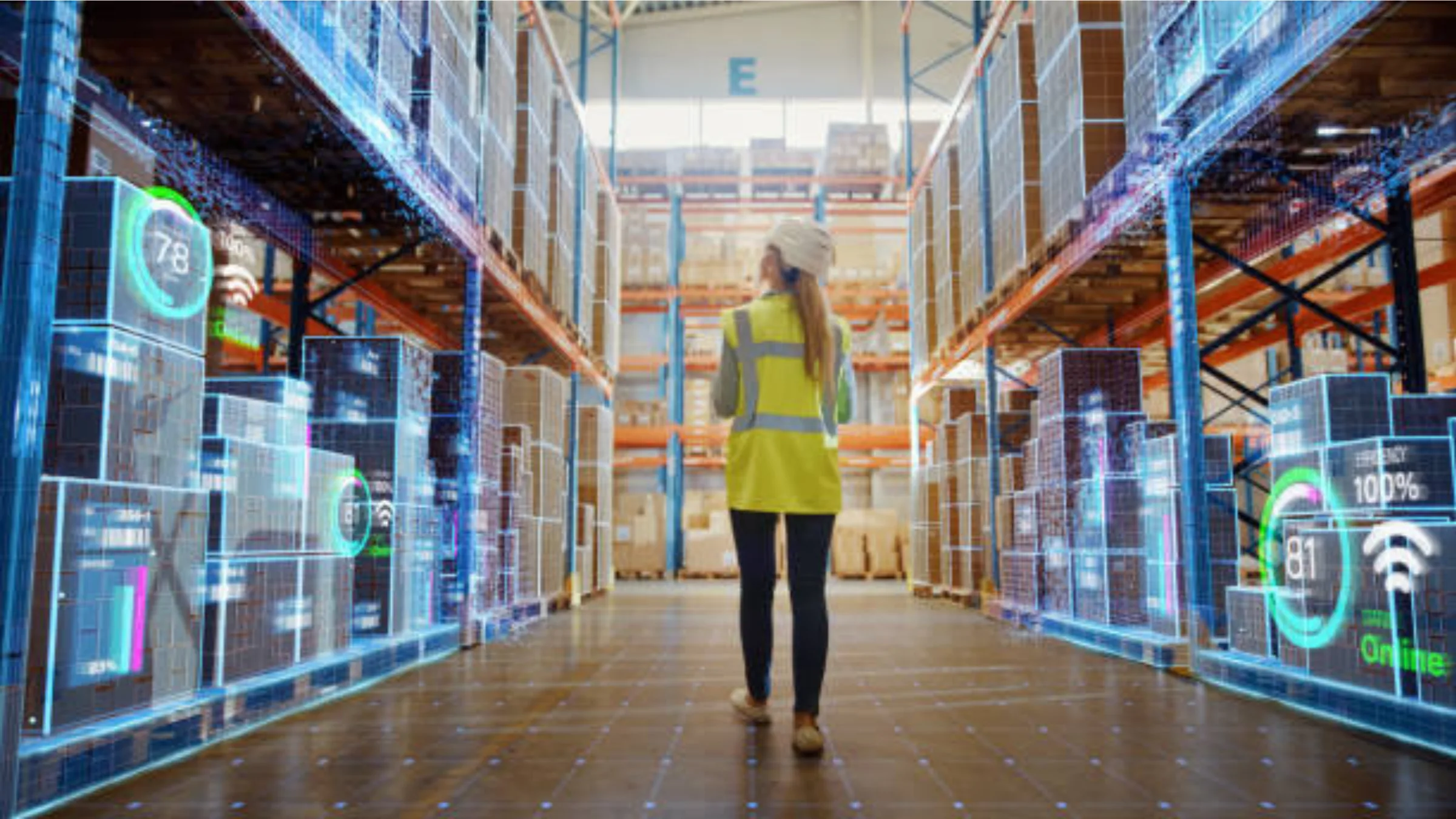
The deployment of Factory of the Future technologies is already under way. The aim: to address the challenges facing businesses — increased productivity, better collaboration, and compliance with sustainability imperatives.
To support the shift, the French government committed financial backing through the France Relance plan, implemented between 2021 and 2022. A budget of €35 billion was unlocked to achieve four main objectives: modernisation, innovation, reshoring, and decarbonisation.
At stake: strengthening the competitiveness of French industry, the adoption of disruptive technologies by businesses of all sizes, increased productivity, improved overall performance, and a reduction in workplace strain. Another major topic: the decarbonisation of factories.
Among the technologies known as Industry 4.0 or the "Factory of the Future" are 5G, augmented reality, Blockchain, and many others. The transition to these disruptive innovations remains difficult for small and medium-sized enterprises and is also seen as a risk by mid-sized companies and large groups.
But how do these various technologies of the future work together to address the challenges facing manufacturers?
5G at the heart of the connected factory
5G is set to become an essential feature of connected factories. Many manufacturers and operators agree that it could spark a genuine industrial revolution as early as 2023. In addition to the additional revenue it could generate, 5G opens up the possibility of developing innovations in the transport, logistics, and urban planning industries.
Some manufacturers are now banking on 5G mobile networks to interconnect their production sites. The reason? 5G enables the deployment of technologies that previously required too much bandwidth to be adapted for industrial use. Among the concrete use cases for 5G in the Factory of the Future are automated production lines, augmented reality applications, and telepresence robots that allow remote site visits. Companies such as Audi and Mercedes-Benz have already begun investing in this very high-speed technology.
Towards the decarbonisation of the factory?
Another challenge for the Factory of the Future: reducing the carbon footprint. Whilst the SNBC (National Low-Carbon Strategy), introduced by the Energy Transition for Green Growth Act (LTECV) and enshrined in the French roadmap for combating climate change (dated 18 August 2015), targets carbon neutrality by 2050, industrial activities remain well above the recommended thresholds for achieving this objective.
CSR (Corporate Social Responsibility) now makes it possible to incorporate economic, social, and environmental issues into industrial activities.
Many tools are being developed to create more effective environmental management. Life Cycle Assessment (LCA), for example, makes it possible to specify greenhouse gas emissions and environmental impacts across the entire lifetime of products.
It is important to identify, calculate, and record the carbon footprint. To do so, it is essential to distinguish between the different levels of calculation, known as scopes and defined by ADEME:
- SCOPE 1: Direct GHG emissions from fixed or mobile installations within the organisational boundary — i.e. emissions from sources owned or controlled by the organisation.
- SCOPE 2: Indirect energy GHG emissions associated with the production of electricity, heat, or steam imported for the organisation's activities.
- SCOPE 3: Other indirect GHG emissions indirectly produced by the organisation's activities that are not counted in Scope 2 but are linked to the complete value chain.
Once greenhouse gas emissions have been identified, reduction or offsetting measures must be put in place, such as purchasing renewable electricity, installing solar panels, or buying certified renewable electricity to balance any surplus.
As consumers become increasingly attentive to the carbon footprint of businesses, one of the trends in Industry 4.0 is to bring greater transparency to industrial activities and traceability across the entire supply chain.
Blockchain in the service of traceability in industry
Brought to prominence in 2008, Blockchain is a technology that stores and shares information securely and enables transactions to be carried out in a decentralised manner, without any intermediary.
In industry, it can be used for supply chain management, storing all the flows between producers, transporters, distributors, and consumers on a decentralised infrastructure.
Some players have seized on this technology to offer an improved customer experience. Labeyrie, a food industry company known in particular for its salmon production, announced a partnership with IBM in 2019 for the implementation of a blockchain. Consumers can scan a QR code on the finished product's packaging to access product information such as its origin, farming method, type of feed, and any treatments it may have received, etc.
Augmented reality and virtual reality for training employees
Augmented reality and virtual reality help address the challenges of technical training — which often requires working in uncomfortable environments — by creating a 3D virtual environment in which technical skills can be acquired more easily, free from the constraints of the "real" world.
Government financial support for the factory of the future
The Ministry of the Economy, Finance, and Industrial and Digital Sovereignty has put in place support for the transition to Factory of the Future technologies — such as additive manufacturing, virtual or augmented reality, and robotics — in order to strengthen the competitiveness of French industry and its capacity to create activity and jobs in the country. This financial support acts as a springboard for the development of new factories.
Industry 4.0 trends thus reconcile sustainability imperatives with productivity and collaboration. These technologies are propelling industry towards the world of tomorrow at a breathtaking pace.
Read next
Expert guide
How has digital technology transformed the work of operators on the factory floor?
Digital technology: real added value on the factory floor Through new technologies such as augmented reality , artificial intelligence , and the digi…
ZOZIO viewpoint
[ Interview 4.0 ] George Elias, Zozio : « Most ERPs aren’t enough to manage intermediate status »
George Elias is Technical Sales Manager for France and Sales Manager North America dedicated to Zozio’s development in the United States. We intervie…
Expert guide
Aeronautical MRO inventory management: how to avoid component shortages?
Why a 99% MRP Service Level Is Not Enough in Aerospace MRO In aerospace maintenance , logistics performance is often assessed using reassuring indica…