

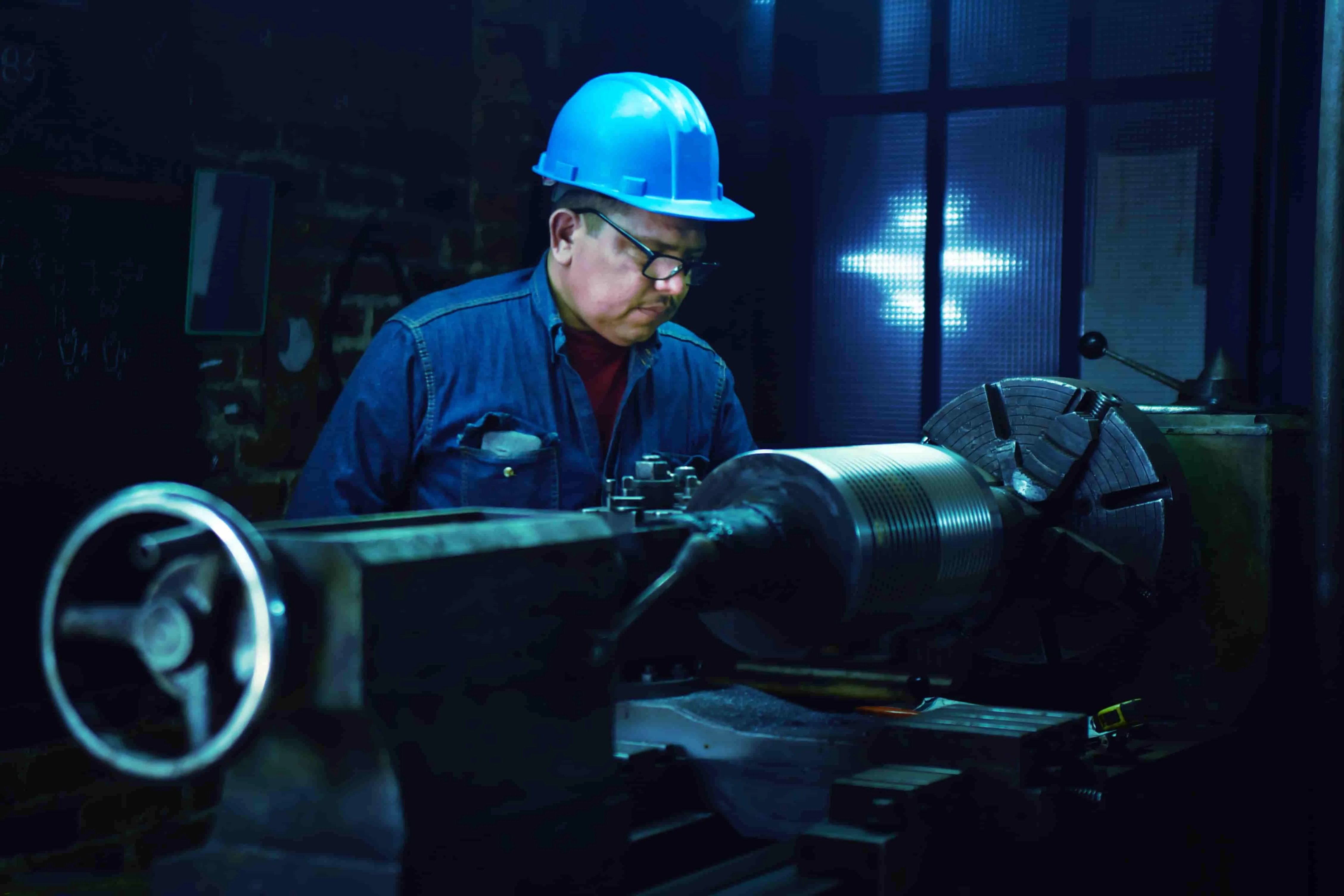
Digital technology: real added value on the factory floor
Through new technologies such as augmented reality, artificial intelligence, and the digital twin, it is clear that digital technology brings significant productivity gains to businesses.
The emergence and deployment of digital technology in businesses — in addition to driving profound changes in product and service offerings — has radically altered the day-to-day reality of operators on the factory floor, transforming the entire organisation.
What are the real impacts of new technologies on these operators?
The digitalisation of tools and methods
The most significant impact is probably on the way operators work. The digitalisation of industrial processes has completely transformed the production chain. From order receipt to inventory management, through manufacturing and delivery, the availability of a centralised information system has fundamentally changed the work of production operators.
These new technologies that are having a major impact on operators are known as ICT — Information and Communication Technologies.
Definition of ICT: Information and Communication Technology
ICT encompasses all technologies used to process, modify, and exchange information in the form of digitised data. These technologies make it possible to improve practices and develop new solutions to address challenges on the factory floor.
Transformed working relationships
New communication technologies have profoundly changed the way people interact on the factory floor. They enable instant communication between operators. Through shared, collaborative spaces, operators can be involved at every stage of a project and communicate in real time.
This shift in communication allows operators to save valuable time, gain greater visibility over ongoing projects, and take on more responsibility.
Optimising movement and travel
Intuitively, it is clear that deploying ICT also helps avoid many unnecessary journeys between colleagues, who can now communicate in real time from a distance, thanks to remote conferencing systems and shared workspaces.
In addition to streamlining meetings and travel, digital technology makes it possible to centralise machine data through specialist software.
Improving working conditions
The deployment of digital technology also significantly improves working conditions for operators. Collaborative robots, for example, boost operator productivity whilst enhancing their safety and well-being. In the aerospace industry, for instance, there are often very heavy components to move and work to be carried out at height. The use of exoskeletons with articulated arms allows operators to perform these tasks safely and without risk. In the wake of these developments, the concept of the augmented operator is emerging.
What is an augmented operator?
In a previous article, we discussed the concept of the augmented operator — an operator whose daily work is simplified and whose efficiency and autonomy are enhanced through a range of technologies.
Among these technologies, one example is the connected safety shoe. These shoes feature an electronic device embedded in the sole that can detect a loss of verticality or prolonged immobility. This provides additional protection for the operator wearing them by detecting a fall and triggering the safety protocol by alerting first responders.
Innovations to improve operators' working conditions are becoming increasingly numerous on the market, and they complement existing Lean Management methods.
The consequences of the emergence of digital technology in businesses are closely linked to companies' desire to adopt a Lean approach. Digital technology offers, for example, easier access to training in the form of tutorial videos or webinars. We are seeing the emergence of MOOCs (Massive Open Online Courses), SPOCs (Small Private Online Courses), and COOCs (Corporate Open Online Courses). This enables businesses to engage more readily in a Lean approach by embedding a culture of continuous improvement.
Ultimately, the ICT of Industry 4.0 does more than simply impact the working conditions of operators on the factory floor — it radically transforms the way they work. The very notion of the operator is evolving with digital technology, as the tasks assigned to them change alongside the new technologies being introduced on the shop floor. The result is greater accountability for operators and a growing need for diverse roles.
Read next

Interview
Industry 4.0 Interview: Stéphane Dubus, LVMH Fragrance Brands
Industry 4.0 Interview: Stéphane Dubus, Perfume Manufacturing & Fragrance Compounds Laboratory Manager at LVMH Fragrance Brands Following the suc…
Expert guide
Jidoka: A Fundamental Method of Lean Manufacturing
Improving Product Quality by Detecting Anomalies in the Production Process What Is Jidoka? Jidoka is a Lean Manufacturing method whereby machines sto…
Expert guide
What Are the Differences Between a Digital Twin and a Unified Namespace?
Digital Twin and Unified Namespace: Understanding Their Real Role in Industry 4.0 Architecture In Industry 4.0 , the concepts of Digital Twin and Uni…