

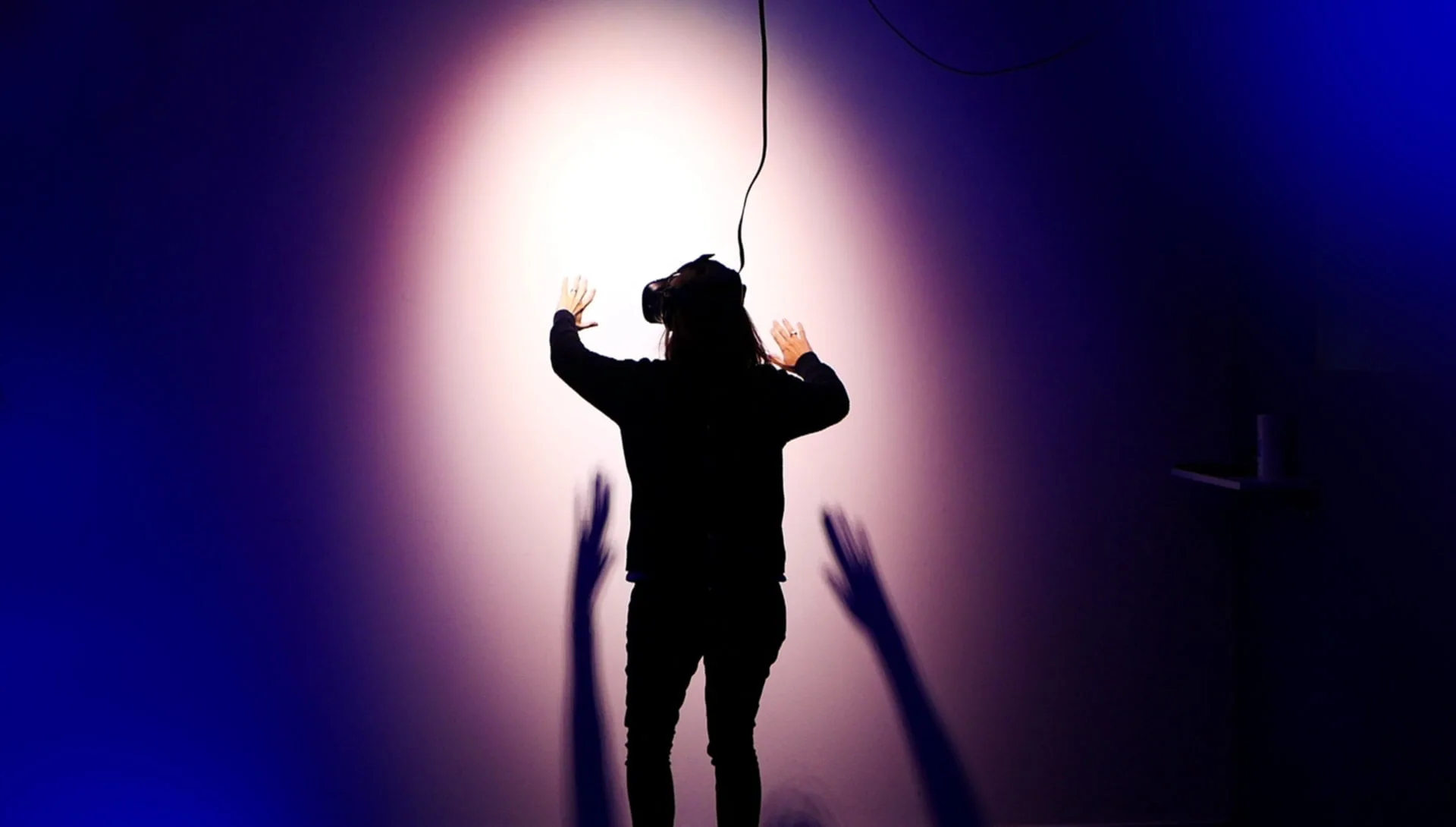
What is augmented reality?
Augmented reality, more simply known as AR, is a technology that superimposes virtual visual or auditory elements onto the real world using a multimedia device. In practice, AR works by capturing reality through a device and adding 3D elements in real time, overlaid onto the real world. In factories, for example, these virtual additions appear in the worker's field of vision through specialist glasses.
What is the difference from virtual reality?
Augmented reality is often discussed alongside virtual reality, also known as VR. Virtual reality is a computer-generated simulation of an alternative world or reality. Whereas augmented reality enhances the real scene, virtual reality creates fully immersive virtual environments.
Both technologies complement one another and are used within the context of the fourth industrial revolution: Industry 4.0.
Why use augmented reality in industry?
AR is widely used in Industry 4.0 because it brings numerous advantages and enables optimisation across different sectors. AR is particularly useful in the following areas:
- Industrial maintenance;
- Marketing and sales;
Through concrete examples, let us look more closely at the benefits of augmented reality.
- Augmented reality in the service of assembly operations:
Companies often rely on PDFs or paper guides to convey assembly procedures. Augmented reality simplifies comprehension by presenting information directly in the user's field of vision.
Augmented reality is particularly relevant for tasks where the number of sequences and the level of complexity are high. For this reason, it is used in aeronautics — notably in the Boeing project, for assembly operations on the parts that will support the engines of the 737 MAX. This is the first aircraft of its kind to be assembled using augmented reality. AR reduces the need for advanced technical expertise and, at the same time, the mental load on employees in their day-to-day work. It is highly useful for replacing assembly guides and for improving the maintenance and inspection of parts.
- Augmented reality: the future of education
AR is also increasingly used in education and professional training.
By making learning more engaging and enjoyable, it helps students acquire, process, and retain information more effectively. Indeed, AR has the potential to replace paper-based learning materials with portable, lower-cost alternatives. It also improves collaborative skills by introducing interactive lessons in which students are actively involved.
In the professional world, it can, for example, replicate field conditions to help workers master the practical skills required for a given role.
- Augmented reality to the rescue when industrial breakdowns occur
Thanks to numerous innovations, augmented reality can now serve as a powerful troubleshooting solution. When a machine breaks down, AR can be used to connect a remote expert with a technician on site. Using augmented reality glasses, the person standing in front of the machine can stream live video to the expert. By interacting directly with the images, the expert can highlight the elements requiring repair — without needing to travel to the site.
- Augmented reality in sales and marketing
In the sales sector, AR offers consumers a new immersive experience. Instead of showing a promotional video, for example, a product could be presented in augmented reality. This is particularly relevant in the automotive sector. Using an augmented reality headset, the salesperson could offer customers a realistic immersion into the car they are interested in, allowing them to explore all its features.
- Almost limitless possibilities
There are a great many examples of augmented reality in use. This technology is a driver of growth within industry, and many companies describe it as indispensable. Whatever your area of expertise, it is therefore essential to learn about this technology in order to seize the opportunities it can offer you.
Read next
Expert guide
What is a bottleneck and how can you limit its impact to optimise production?
What is a bottleneck? On a production line, a bottleneck is a workstation that receives more work than it can handle at its maximum production capaci…
Interview
Cédéric Berg’s winning strategy as Plant Manager at Vetrotech Saint-Gobain
Development - Digitalisation - Reliability: a plant manager’s winning strategy For the past five years, Cédéric Berg has been at the head of one of t…
Expert guide
Industrial Automation: What Are the Challenges for the Cosmetics Industry?
How the cosmetics industry, a complex and highly regulated industry, is moving towards process simplification to optimise its production performance.…