

What is work in progress (WIP)?
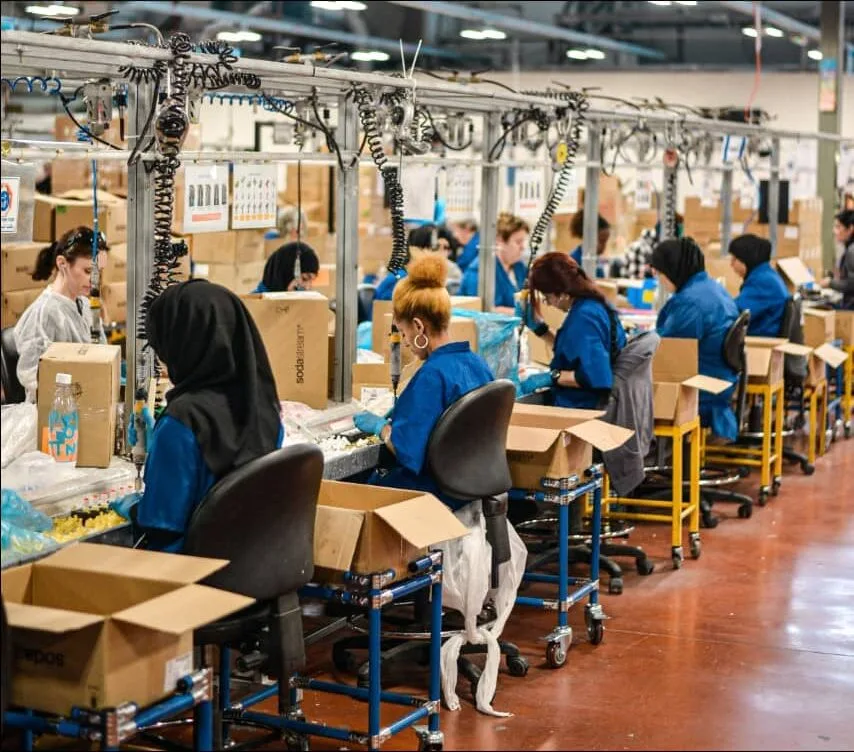
WIP (work in progress) refers to goods or services being manufactured or executed by a company that are not yet complete. In industry, WIP sits on the production line, as it has not yet completed the full manufacturing process.
On a production line, WIP acts as a buffer and helps limit production interruptions.
Note: WIP is defined by accounting period. It therefore refers to products that have not completed the full manufacturing process by the end of an accounting period. Furthermore, from a tax perspective, WIP forms part of stock.
Taking stock of WIP
The first step in managing WIP is to take stock of it. A stock count makes it possible to identify potential discrepancies between the theoretical values of WIP and the WIP actually present on the production line. Identifying any such discrepancy is essential, as it highlights losses, theft, or management errors. Furthermore, WIP stock counts are mandatory at the close of the financial year.
When carrying out a stock count, it is recommended to perform several counts by different individuals to minimise errors. Those conducting the count use a counting sheet listing the WIP references. They then move along the production line to count WIP at each stage of the process.
For optimal management of the production process, WIP management goes hand in hand with inventory management, which is why carrying out a full stock inventory is equally essential.
Optimising inventory and WIP
A stock count is an essential step in WIP management, but it does not in itself optimise WIP. Yet optimising inventory and WIP is a key challenge for improving the industrial performance of businesses. Several methods exist to optimise both.
To reduce inventory, ABC analysis can be used. This involves classifying stock by assigning it a letter: A, B, C, or D.
- Category A stock comprises goods with the highest annual consumption. It accounts for 70–80% of annual consumption, for 10–20% of the total number of items in stock.
- Category B stock comprises goods with an average consumption value. It typically accounts for 15–25% of annual consumption, for 30% of the total number of items in stock.
- Category C stock comprises goods with the lowest annual consumption. It accounts for approximately 5% of annual consumption, for 50% of the total number of items in stock.
- Category D stock is obsolete stock. It can account for up to 35% of the total number of items in stock.
This analysis makes it easy to identify stock that is no longer needed and should be set aside.
- Optimising WIP
To optimise WIP, flow simulation can be used, which makes it possible to define WIP levels and intermediate stock levels.
The objective of flow simulation is to test different production scenarios in order to size and quantify the best improvements to the production system. In other words, flow simulation makes it possible to quantify more concretely the productivity gains generated by each hypothesis.
Starting from these hypotheses, it is therefore possible to obtain the optimal WIP level for each production machine. By combining these optimal hypotheses with ABC analysis, production management can be dramatically improved.
Other optimisation methods
Depending on the industrial process in question, other methods exist to reduce WIP. These include Takt Time, which corresponds to a target production rate, sometimes achieved through a reorganisation of workstations. Takt Time is a tool for improving throughput rate that notably helps reduce WIP.
Optimising inventory and WIP can also be achieved through the pull flow method, where the customer “pulls” production.
If you are looking to improve your WIP management, find out which optimisation methods are best suited to your industrial process!
Read next

Expert guide
Limiting the impact of equipment failures on production through curative and corrective maintenance
Curative maintenance is akin to repairing defective or damaged equipment. This type of maintenance is generally emergency maintenance, as it involves…

Partnership
Partnership: Zozio, Simac and Fokker Services Group join forces to build the Next-Generation Digital Twin Technology for MRO Management
A Cutting-Edge Solution for Maintenance, Repair and Overhaul (MRO) Thanks to its integration partner SIMAC IT, Zozio and Fokker Services Group have j…
Expert guide
Factory of the Future: the Pharmaceutical Industry in Full Transformation
Digitalisation of Production, Regulation and Eco-Responsibility: Major Challenges and Multiple Imperatives for Pharma 4.0 The pharmaceutical industry…