


We met with Gabriel Raffour, head of the DaherLab, to discuss the fourth industrial revolution.
Family-owned aircraft manufacturer and industrial supplier Daher is committed to developing Industry 4.0. Its recent partnership with the Occitanie Region demonstrates a strong commitment to the logistics of the future. This is also reflected within the group's open innovation hub, where innovative solutions are tested: the DaherLab.
Innovation: the key to lasting performance
“Since its founding in 1863, the group has weathered several industrial crises,” Gabriel Raffour explains. To secure its longevity and assert its leadership, Daher has chosen to bet on innovation, an integral part of its DNA.
One of its flagship initiatives is the DaherLab, led by Gabriel Raffour, for whom “success comes from the agility to implement new solutions quickly.”
Innovative new technologies are tested there. Its creation stems from a realisation by the Daher group that, unable to be an all-knowing expert, it needed smaller, more agile structures.
The DaherLab acts as an interface between the company and start-ups. Its primary mission is “to identify, test, and rapidly capitalise on innovative and mature solutions.”
The DaherLab: an innovation hub.
The DaherLab brings innovation to field teams through a dual approach: pull and push.
The pull approach involves surfacing issues from the field — whether from the group’s factories and warehouses or across all cross-functional departments (HR, Finance, Quality, …) — and then finding solutions to them.
The push approach involves seeking out solutions to support business teams. Sometimes, “solutions create the needs,” Gabriel explains.
To this end, the DaherLab teams continuously monitor technological developments to stay alert to promising solutions — and not solely within Daher’s own sectors of activity.
As an open innovation hub, the DaherLab seeks to integrate external innovations into the business with minimal investment and maximum confidence.
Once a solution is identified, it is put to the test directly on industrial sites through a “quick win” approach — PoCs (Proofs of Concept). Several technologies can thus be integrated simultaneously over a period of up to 6 months in factories and warehouses.
During this period, Gabriel’s teams and business units verify the relevance of each solution, refine it, and validate its integration in tandem with the “end users” — namely, frontline staff.
All of this learning is consolidated in a Retex (Return on Experience), which captures the tangible and intangible value that has been — and could further be — realised through industrialisation and deployment.
The DaherLab’s mission ends at the Retex stage. Dedicated teams then take over to convert the trial into practice and integrate the solution into the group’s everyday operations.
The teams remain constantly open to innovation because, as the director explains, “sometimes solutions give rise to other needs.”
Industry 4.0: The Specific Challenges of a Digital Revolution
The fourth industrial revolution brings, beyond the fusion of the digital world and the factory floor, new challenges brought sharply into focus by the health crisis. New solutions must be “green & ethic by design”.
At Daher, questions of respect for the environment and people are key issues. The head of DaherLab clarifies: “production must run smoothly, flexibly, efficiently, and with respect for the environment, our ecosystem, and our colleagues.”
To achieve this, visibility across our logistics and production flows is essential. This is how solutions such as Zozio are being tested.
Zozio's platform provides real-time visibility across our flows which, combined with historical logging, guarantees end-to-end traceability.
“Traceability is key to optimising the impact of our operations.”
Many other projects are under way or forthcoming at DaherLab, including an energy optimisation project for a warehouse and the digitalisation of human senses (smell, heat, noise) to improve the quality of the working environment on an industrial site.
For Gabriel Raffour, the digital transformation – and its implementation in factories – is only just beginning.
In a few years, employees will most likely spend as much time working on their factory's digital twin as on the actual shop floor. They will be further augmented by tools such as virtual reality and cobotics.
According to the head of the DaherLab, the evolution of industry will unfold around three axes:
- the modularity of the physical world, which must be capable of replicating the agility of the digital realm, notably through the digitalisation of our factories and warehouses
- sustainability, as it is one of the key challenges of tomorrow's world… including for industry
- people, who must remain at the heart of tomorrow's factory and warehouse
Indeed, while the digitalisation of the factory is already under way, it raises the question of the role of people and the place of the factory within its environment, Gabriel notes, expressing confidence in the DaherLab and its teams' ability to find the best-performing solutions in keeping with the essential role of the operator on the shop floor.
“People must have their place, and machines must serve people — not the other way round.”
Read next
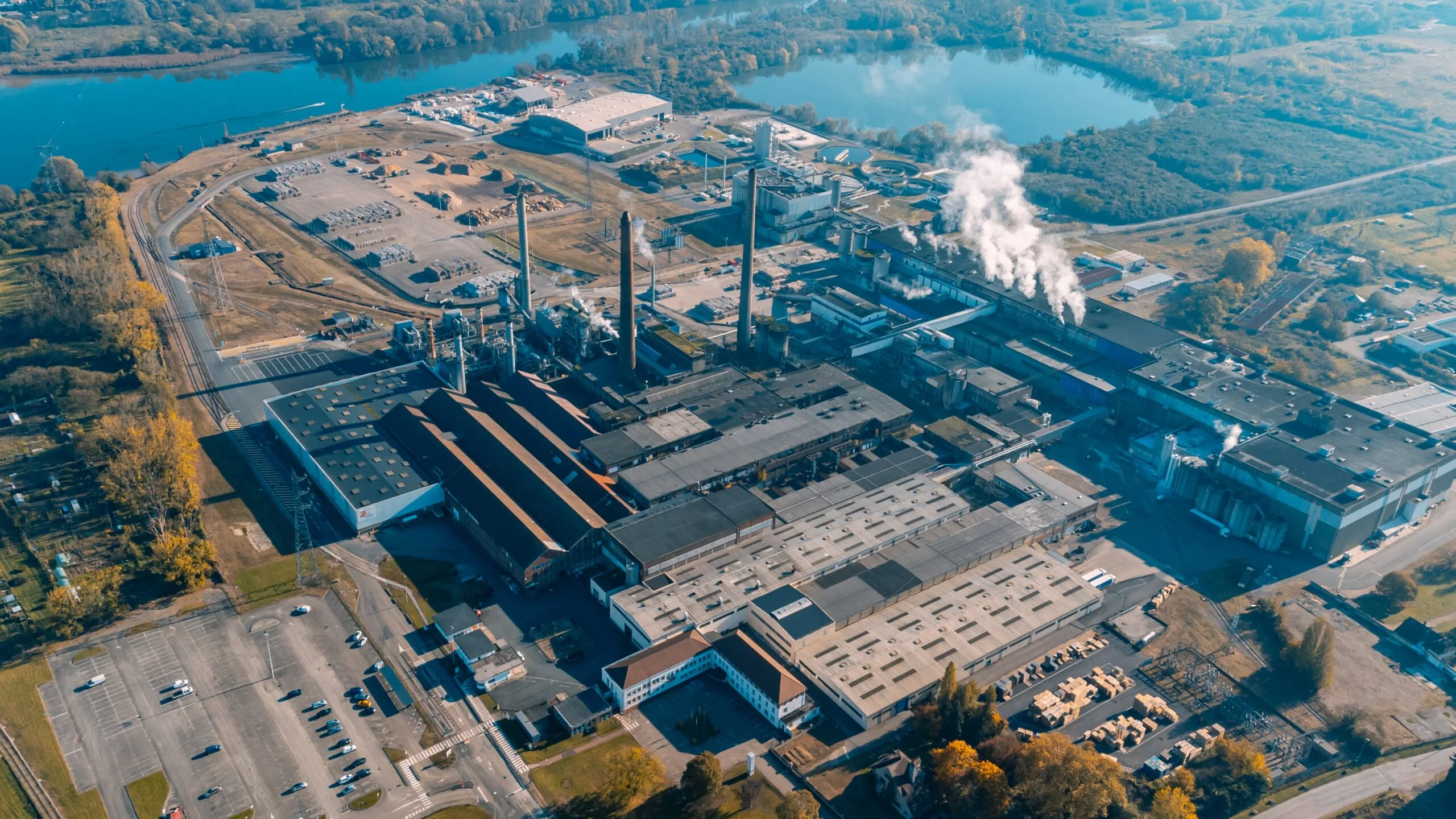
Expert guide
Reindustrialisation: Where Does France Stand?
To remain competitive on the international stage and ensure its economic sovereignty and independence — particularly in times of crisis — France has…
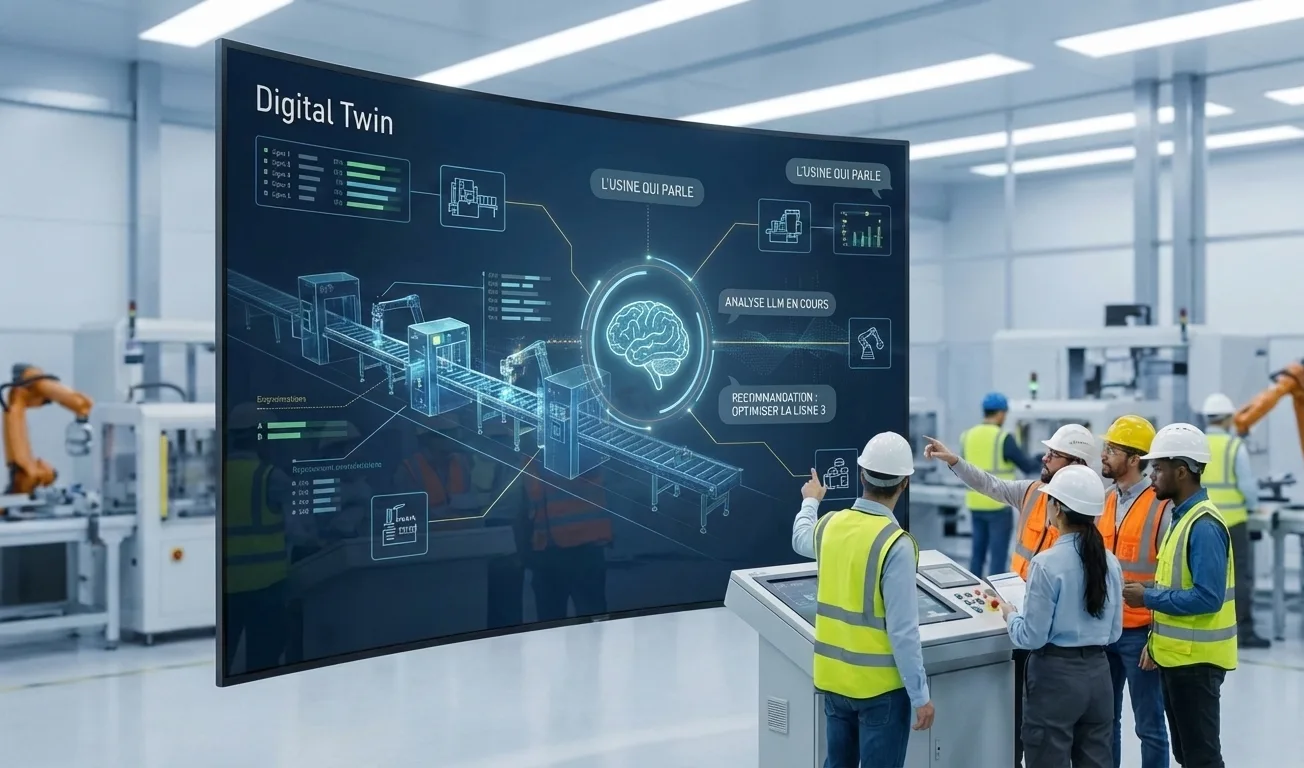
ZOZIO viewpoint
LLM in Manufacturing
By Bastien Triclot, CEO of Zozio & Industry 4.0 Transformation Expert The industrial sector is experiencing a complexity crisis. While we have in…
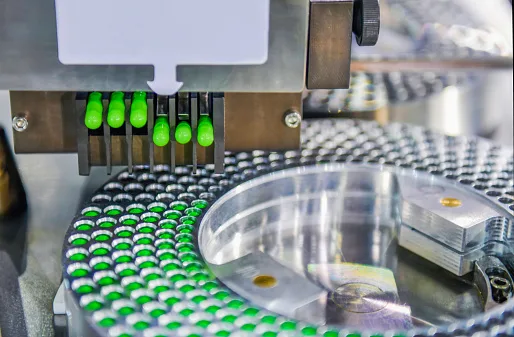
Expert guide
Factory of the Future: the Pharmaceutical Industry in Full Transformation
Digitalisation of Production, Regulation and Eco-Responsibility: Major Challenges and Multiple Imperatives for Pharma 4.0 The pharmaceutical industry…